







Manual purchasing workflows create an expensive tax on enterprise procurement, driving up processing costs and dragging out cycle times. Evaluating modern procurement automation tools allows organizations to remove tedious rekeying, streamline approvals, and automate invoice matching across the purchasing lifecycle. Furthermore, deploying advanced AI agents like autonomous tail spend negotiation tools enables teams to capture lost savings on high-volume, unmanaged spend without increasing headcount. The six platforms Gartner named Leaders in 2026, which manual purchasing workflows to automate first, and how to tell real automation from a digitized form.
TL;DR
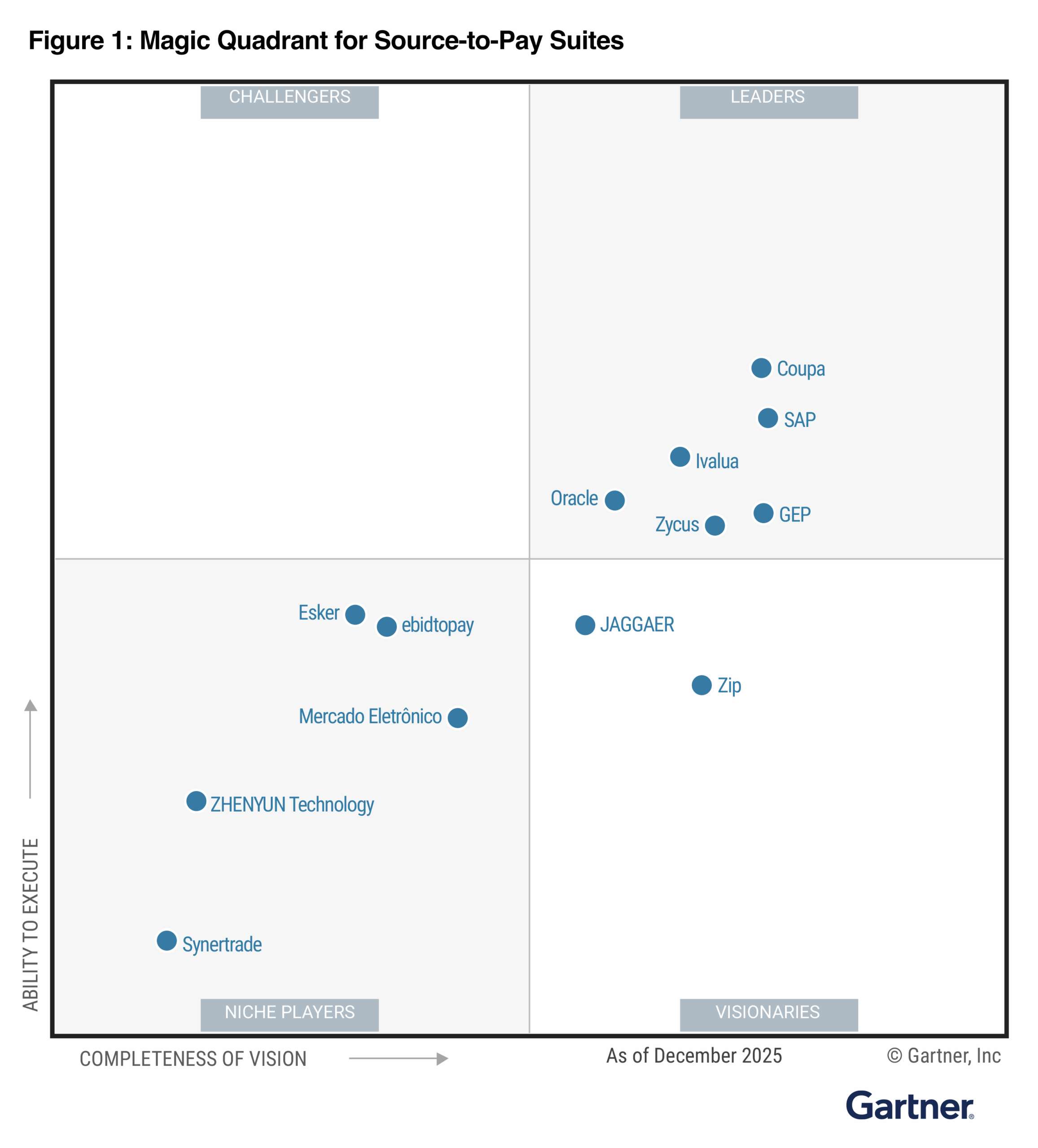
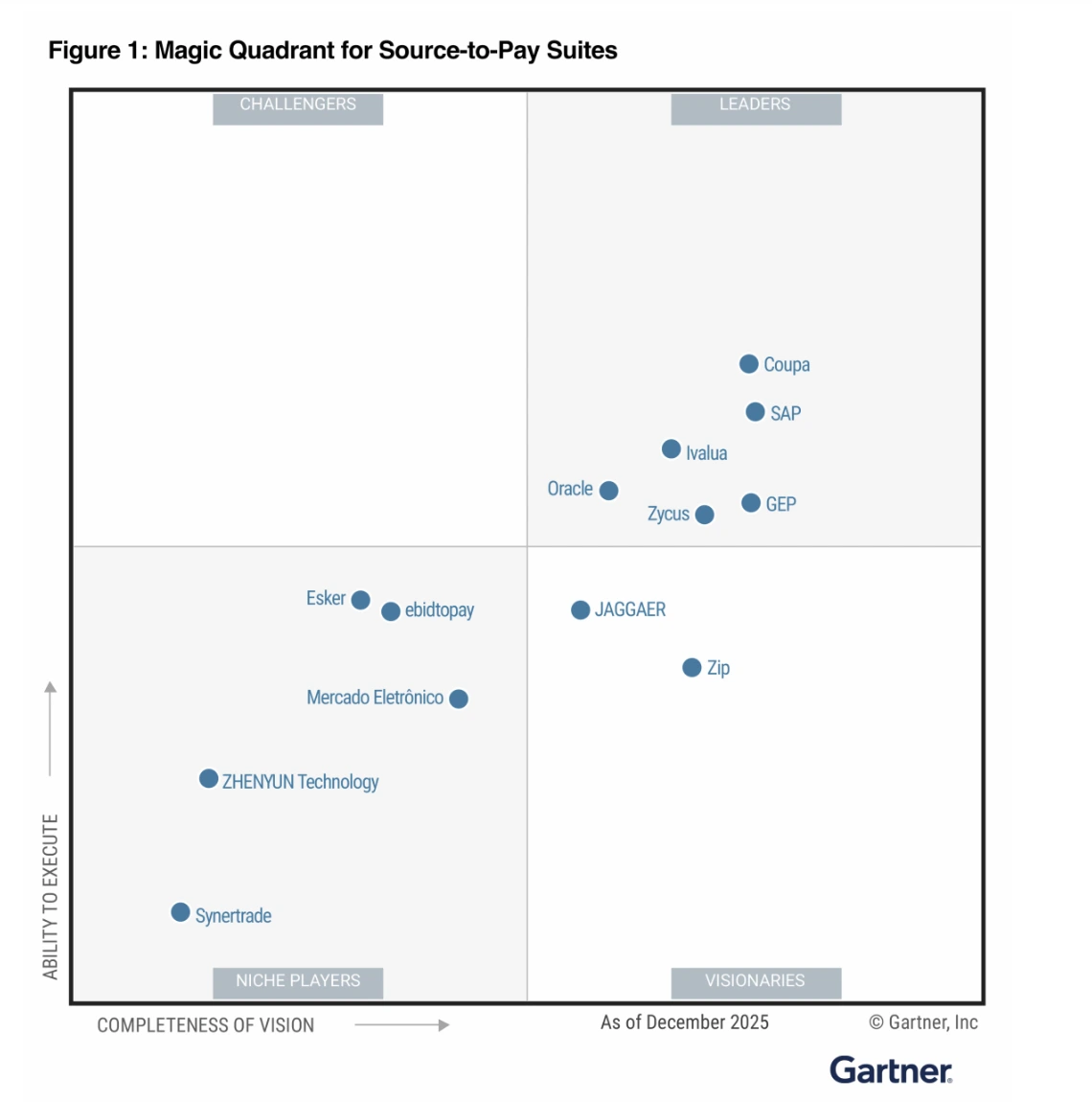
- Gartner named six Leaders in its January 2026 Magic Quadrant for Source-to-Pay Suites: Coupa, GEP, Ivalua, Oracle, SAP, and Zycus. Procurement automation spans sourcing through payment.
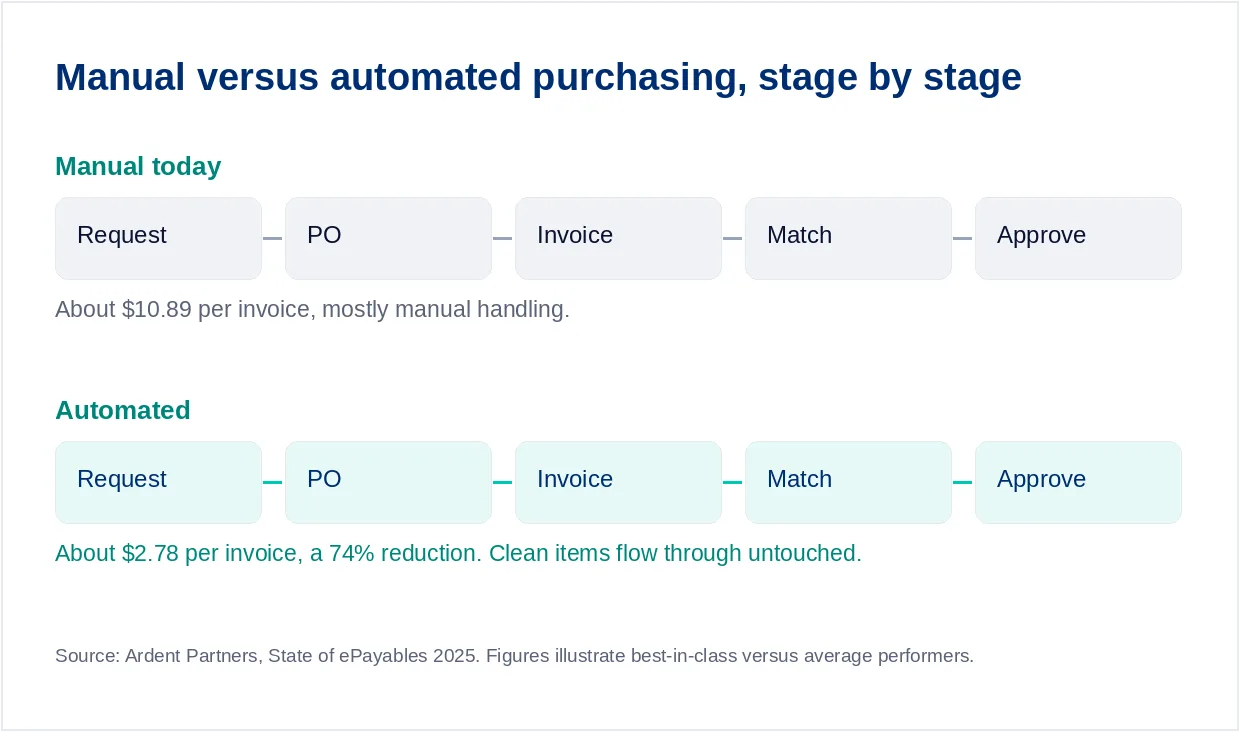
- Manual purchasing work is expensive. Best-in-class teams process an invoice for about $2.78 against roughly $10.89 for average performers, a 74% gap (Ardent Partners).
- The workflows worth automating first: intake and guided buying, invoice matching, approvals, negotiation, and the rekeying of data between systems.
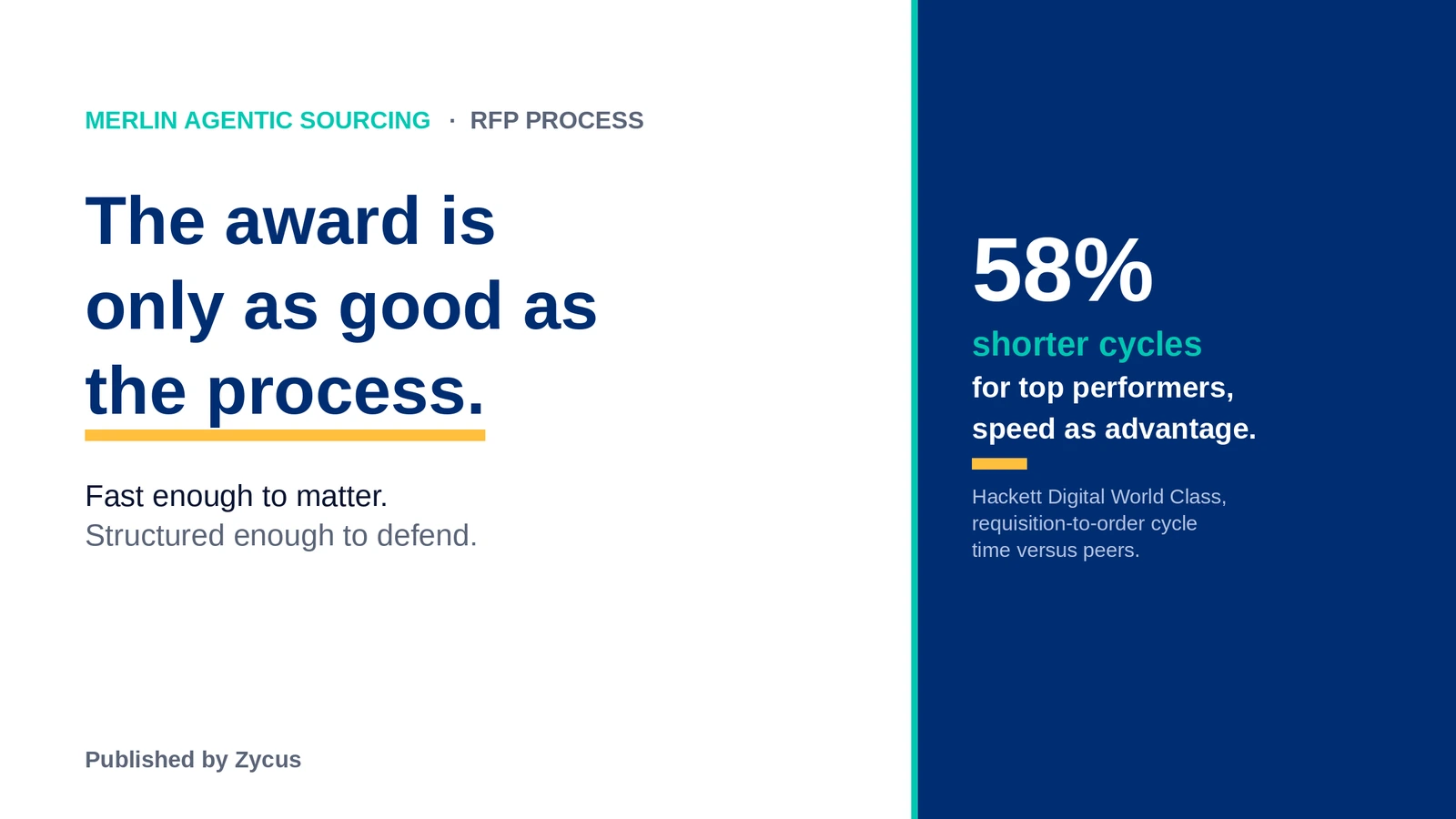
- Automation compounds. Digital World Class procurement teams run 58% shorter requisition-to-purchase-order cycles (Hackett Group, 2025).
- Real automation decides. A digitized form only routes. The difference is whether AI and governance share one data model or are bolted on separately.
- Compare the full strengths and cautions for every Leader in the 2026 Gartner Magic Quadrant for Source-to-Pay Suites.
How we built this list
Why these six. Procurement automation spans sourcing through payment, so the benchmark that covers it is the 2026 Gartner Magic Quadrant for Source-to-Pay Suites, published 21 January 2026, which evaluated 13 providers. We included the six named Leaders and did not add or remove any based on our own view. Point solutions that automate a single workflow, such as AP-only or intake-only tools, are outside this list.
How we assessed each one. We profiled all six against the five manual workflows this article covers: intake and guided buying, invoice matching and exceptions, approvals and policy enforcement, negotiation and sourcing, and integration that ends rekeying. Profiles draw on Gartner’s published positioning, each vendor’s own product documentation, and public reviewer data from Gartner Peer Insights and G2.
What does manual purchasing work actually cost?
The cost of manual purchasing is easy to underestimate because it is spread across the process rather than sitting in one line item. It hides in maverick spend that bypasses controls, in invoice exceptions that get worked by hand, in approvals chased over email, and in data rekeyed from one system into another. Each is a small tax, and together they are large.
Ardent Partners’ State of ePayables 2025 research finds that best-in-class accounts payable teams process an invoice for about $2.78, against roughly $10.89 for average performers, a 74% gap that widens with volume. At an enterprise processing a hundred thousand invoices a year, that gap alone is worth more than $800,000, before counting the approvals, exceptions, and rekeying elsewhere in the cycle. The goal of procurement automation is not to digitize these tasks but to remove the manual work inside them.
What does the Gartner Magic Quadrant for source-to-pay measure?
Procurement automation spans sourcing, contracting, purchasing, and payment, so the most useful independent benchmark is the Gartner Magic Quadrant for Source-to-Pay Suites. Gartner rates vendors on two axes: Ability to Execute, proven delivery today, and Completeness of Vision, direction, increasingly defined by agentic capability. Leaders score high on both.
For a team focused on removing manual work, the vision axis matters most, because it separates platforms that route tasks from those that can act on them. Reading the two axes separately tells you whether a Leader can remove manual work today or only promises to.
Which platforms are the 2026 leaders?
In its January 2026 edition, Gartner evaluated 13 providers and named six Leaders. Each takes a distinct approach:
- Coupa is recognized for spend management and a large business network, and fits indirect-spend programs that prioritize fast adoption.
- GEP pairs procurement software with consulting services, fitting advisory-led transformation programs.
- Ivalua is recognized for a configurable, unified platform, fitting sourcing-intensive programs with direct-spend depth.
- Oracle embeds procurement inside its cloud ERP suite, fitting finance-led, Oracle-standardized enterprises.
- SAP leverages its ERP ecosystem and business network, fitting SAP-standardized global enterprises.
- Zycus is recognized for agentic AI built into a unified suite, fitting enterprises that want to move manual work to autonomous agents under governance.
At a glance:
| Platform | Recognized for | Best fit | Weakest fit | ERP integration posture |
|---|---|---|---|---|
| Coupa | 2026 MQ Leader, positioned highest for Ability to Execute for the third consecutive year; spend management breadth and a large business network | Indirect-spend programs wanting fast adoption and community benchmarking | Reviewer themes cite long implementations and a heavy interface for occasional requesters, which limits how much intake actually gets captured | Cloud SaaS, ERP-agnostic; typically needs middleware for SAP; strong with Oracle, Workday, Microsoft Dynamics |
| Zycus | 2026 MQ Leader; agentic AI built natively into a unified suite, taking enterprises from Source-to-Pay to Intake-to-Outcomes | Enterprises wanting manual work moved to autonomous agents that act inside the governance layer rather than beside it | Supplier-network reach is smaller than SAP Ariba’s or Coupa’s, so network-density-led programs may weigh those higher; enterprises fully standardized on Oracle or SAP ERP that want procurement native to that stack will find the incumbent a shorter path | Cloud, ERP-agnostic with pre-built connectors for SAP and Oracle; Zycus states 1,121 APIs |
| GEP | 2026 MQ Leader for the second consecutive year; software paired with consulting, covering direct and indirect on one stack | Advisory-led automation programs wanting software and services from one provider | Smaller independent review base than Coupa or SAP Ariba, so less public evidence to assess before committing | Cloud-native; integrates with SAP S/4HANA, SAP ECC, Oracle Fusion, Oracle E-Business Suite, Workday |
| Ivalua | 2026 MQ Leader; configurability on a single data model, with direct-materials depth | Teams whose workflows are unusual enough that configurability matters more than out-of-the-box speed | Reviewers repeatedly cite a configuration learning curve and training as the main adoption barrier; services cost is a real TCO line | Cloud, ERP-neutral with bi-directional sync; supports SAP and Oracle, middleware typical for SAP |
| Oracle | 2026 MQ Leader; procurement embedded natively inside Oracle Fusion Cloud | Finance-led teams already standardized on Oracle Fusion, where procurement and finance sharing one stack removes integration work | Independent roundups consistently describe the value as strongest inside an Oracle landscape; less compelling for mixed estates | Cloud, native to Oracle Fusion ERP |
| SAP Ariba | 2026 MQ Leader; enterprise breadth, native SAP integration, and the largest supplier business network | SAP-standardized global enterprises with very large supplier bases | Reviewer themes cite implementation complexity and a heavy interface that suppresses casual-user adoption, pushing spend off-platform | Cloud, native for SAP S/4HANA and ECC; open APIs for third-party ERP |
All six are Leaders. The useful work is matching a profile to yours, and deciding which manual workflows to hand over first.
Which manual workflows should you automate first?
Not all manual work is equal. The workflows worth automating first are the ones that are high in volume, rule-bound, and close to where control is lost. Five stand out.
How does automated intake stop maverick spend before it starts?
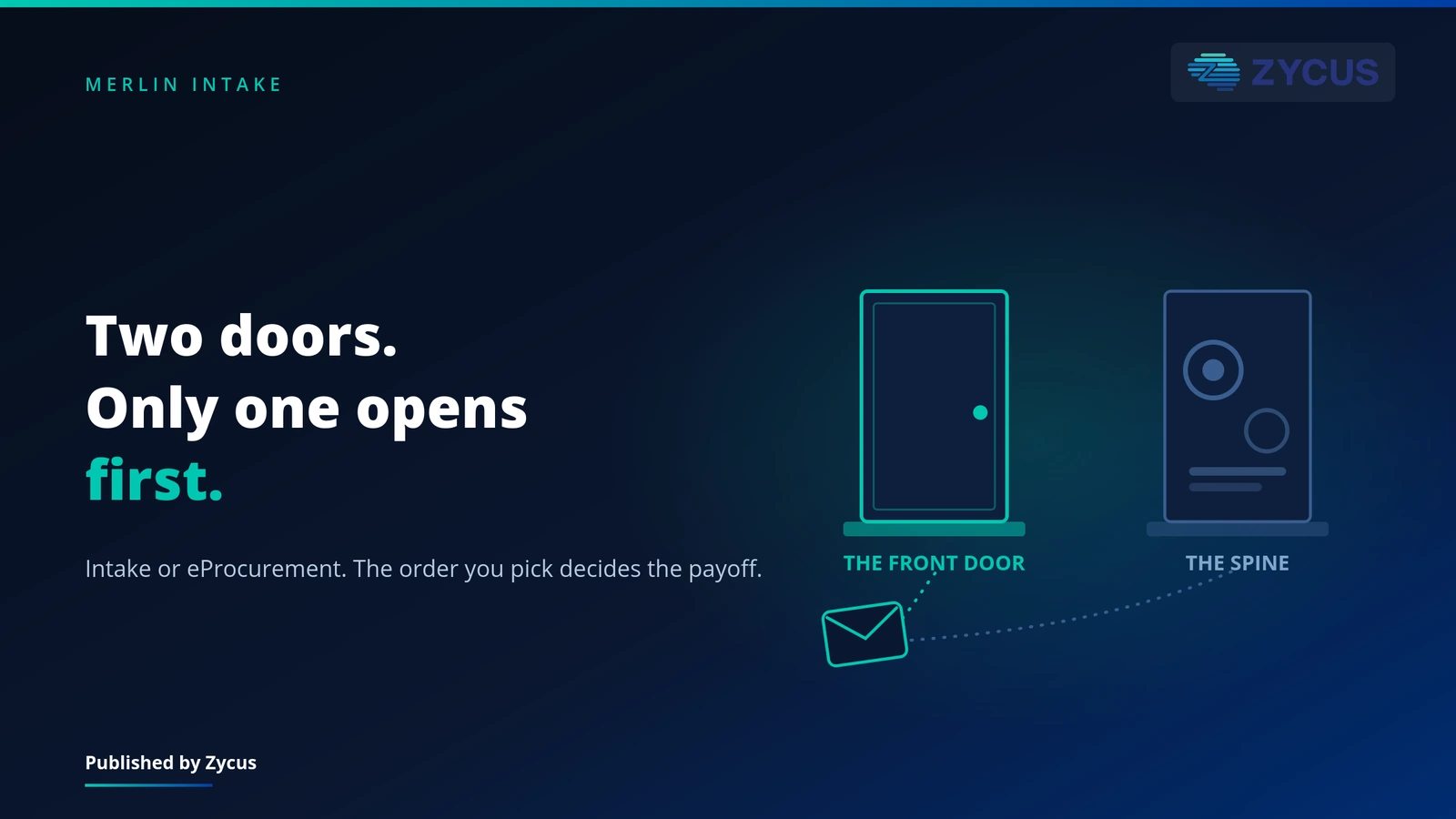
Most maverick spend starts with a person who cannot find the right way to buy, so they email a supplier or use a card. Automated intake gives every request a single front door that guides the buyer to a compliant channel and captures the request in structured form. This removes the manual triage that procurement teams do after the fact, and closes the gap through which off-contract spend leaks.
What changes when three-way matching runs automatically?
Three-way matching is the most manual task in the cycle, and the one automation changes most. When capture, coding, and matching run automatically, clean invoices flow through untouched and only real exceptions reach a person. A team that lets clean invoices post themselves reviews only the ones that genuinely need a person, which is a different job than keying every line. The payoff is the gap in the section above: the difference between $2.78 and $10.89 per invoice is almost entirely the manual handling that automation removes.
How do you enforce policy without chasing approvals over email?
Approvals chased over email are slow and hard to audit. Automated routing sends each request to the right approver with policy checked in the flow, so compliance is enforced as the purchase moves rather than reconstructed later. The time saved is measurable: Hackett Group’s 2025 research shows Digital World Class procurement teams run 58% shorter requisition-to-purchase-order cycles than their peers.
Can tail-spend negotiation actually run without a person?
Tail spend is too large to negotiate by hand and too costly to ignore. Zycus reports that its Autonomous Negotiation Agent (ANA) negotiates tail-spend categories without human intervention, delivering 2 to 7% cost savings on competitively sourced transactions and a 30 to 60% productivity improvement for tactical buying teams, based on Zycus customer deployment data. The team spends its time on the sourcing events that need judgment rather than the ones that do not.
How much manual work is just rekeying data between systems?
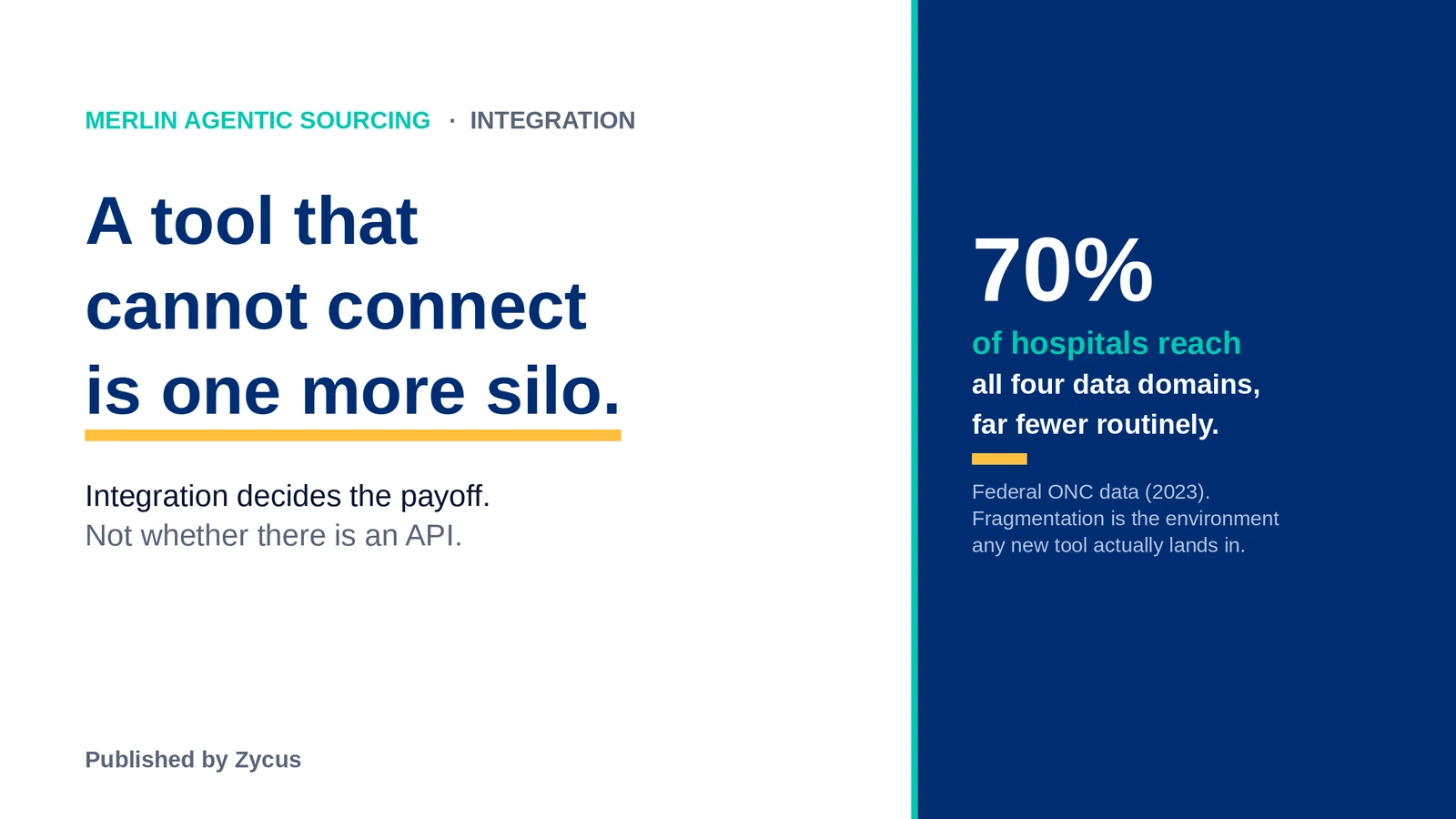
A surprising amount of manual work is simply moving data between procurement and finance systems by hand. Zycus states that its Merlin Agentic AI Platform exposes 1,121 APIs, keeping spend, supplier, and invoice data consistent across systems, so no one rekeys a purchase order into the ERP or reconciles a mismatch a connector should have caught.
How do you tell real automation from a digitized form?
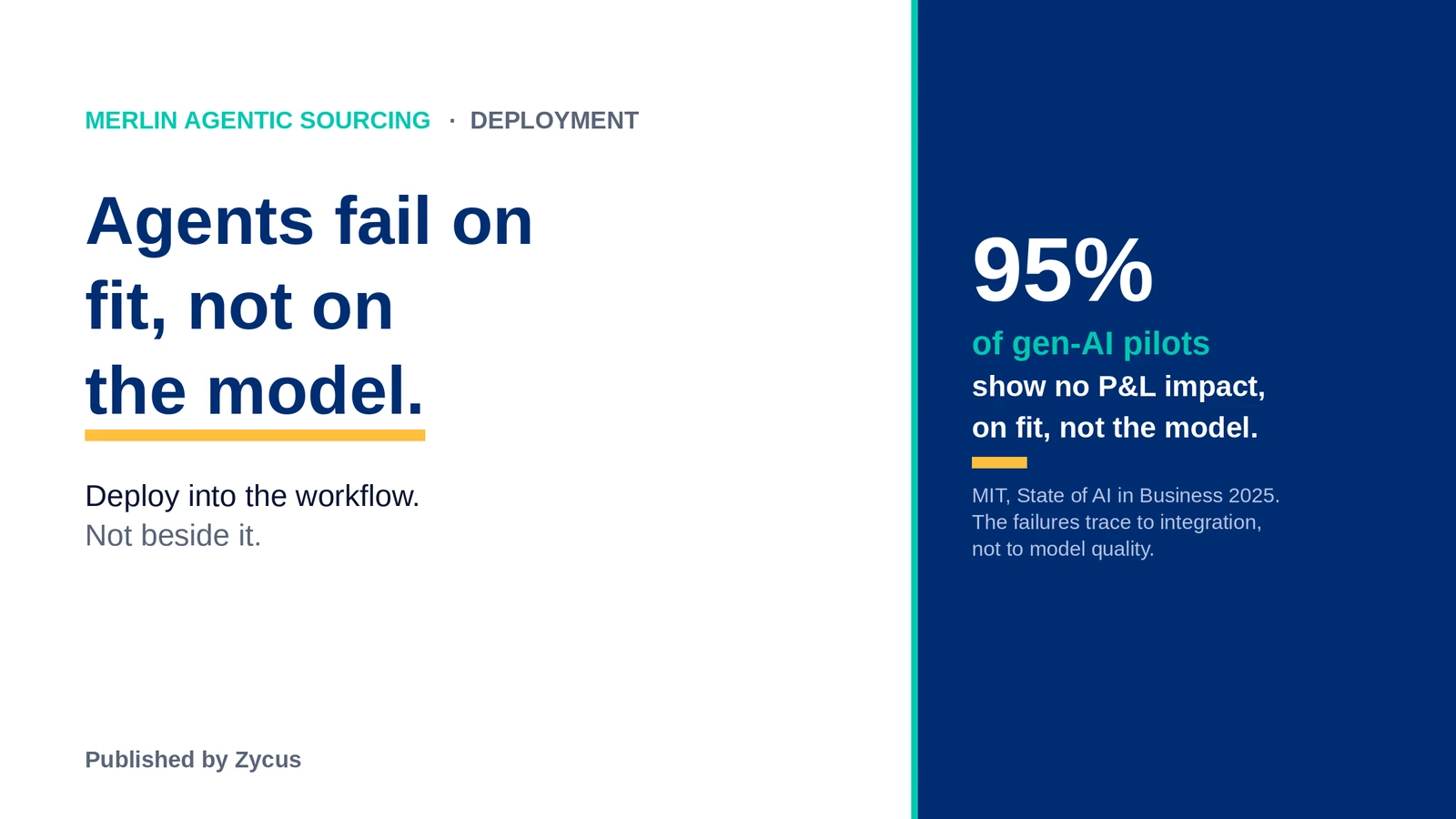
The word automation covers a wide range, and the difference matters when you buy. A digitized form routes a task to a person faster. Real automation completes the task, and agentic automation decides how. The test in a demo is simple: ask whether the platform routes the work or does the work, and what it does when an invoice does not match or a request fall outside policy. Most tools sit in the middle, automating the easy path and handing the rest back, so what matters is the share of real cases the platform closes without a person. Built-in beats bolt-on here, because a platform whose AI and governance share one data model can act on a decision that a bolted-on tool can only flag. The result shows up in where the team spends its time Hackett Group’s research shows top procurement teams spend 26% more time on analysis than on manual data collection.
Where does Zycus fit for reducing manual work?
Zycus is built to move manual work to agents without giving up control. The Merlin Agentic Platform runs governed, multi-agent flows across one unified suite, taking enterprises from Source-to-Pay to Intake-to-Outcomes. Merlin Intake gives every request a single front door, ANA handles tail-spend negotiation autonomously, and the suite is backed by 32+ patents.
According to Zycus company figures, the platform has processed more than $1 trillion in spend globally across its deployments. The operating principle keeps a human in charge of the outcome: AI decides, the suite governs, the enterprise stays in control. Read against the workflows above, that is the profile Zycus is built to fit.
What have enterprises reported after automating?
- In one Fortune 500 bank deployment, Zycus identified $8.2 million in invoice misclassifications and cut sourcing cycle time from 14 weeks to 6.
- Where Merlin Intake gives every request a single front door, Zycus reports one enterprise running more than 1,000 active users and 4,500 suppliers through it, alongside a 20% improvement in spend under management and 40% NPS growth.
- A global electronics manufacturer analyzed $22.6 billion in spend across more than 20 million transactions on the platform.
What does the analyst recognition actually say?
Independent recognition is converging. Zycus was named a Leader in the 2026 Gartner Magic Quadrant for Source-to-Pay Suites, a Leader in the 2025 IDC MarketScape for AI-enabled source-to-pay, and a Customers’ Choice in the 2025 Gartner Peer Insights Voice of the Customer for Source-to-Pay Suites. For a multi-year automation decision, analyst evaluation and verified customer reviews pointing the same direction matters more than any single ranking on its own.
What are the limits of a best-tools list?
A quadrant ranks the market. It does not rank your fit. All six Leaders are capable platforms, and the right choice depends on the manual work you most need to remove, the systems you keep, and the control you require. Use the list to build a shortlist, then test it against your own workflows rather than treating position as a verdict.
How do you move from shortlist to decision?
Pick the two or three manual workflows that cost you the most, shortlist the Leaders that remove them best, and run demos on your real cases rather than scripted ones. Validate every claim against analyst evaluations and customer references and use a deeper procurement automation software comparison to score platforms on the capabilities that matter to your team.
GET THE REPORT
Read the 2026 Gartner® Magic Quadrant™ for Source-to-Pay Suites to see how all 13 vendors were evaluated on Ability to Execute and Completeness of Vision, and why Zycus is positioned in the Leaders quadrant.
Gartner, Magic Quadrant for Source-to-Pay Suites, Micky Keck, Magnus Bergfors, Kaitlynn Sommers, Alex Brady, Lynne Phelan, 21 January 2026. Gartner and Magic Quadrant are trademarks of Gartner, Inc. and/or its affiliates. Gartner does not endorse any vendor, product or service depicted in its research publications, and does not advise technology users to select only those vendors with the highest ratings or other designation.
Reducing manual purchasing work requires shifting from basic task digitization to true agentic automation. Implementing purpose-built procurement automation tools eliminates administrative friction, allowing procurement teams to spend more time on strategic analysis and supplier relationships. By embedding autonomous tail spend negotiation tools and intelligent workflows into one governed data model, enterprises turn routine purchasing into a fast, touchless operational advantage.
Transitioning away from manual purchasing friction requires moving beyond simple digitized forms to an intelligent, unified procurement automation tool. By replacing email-chased approvals and system rekeying with agentic AI and touchless workflows, high-performing procurement teams shorten requisition-to-PO cycles by 58% and shift focus toward strategic value creation.
Ready to eliminate manual bottlenecks and capture full visibility across your spend? Request a demo today to see how Zycus’s AI-driven procurement suite turns complex purchasing workflows into a seamless operational advantage.
Frequently Asked Questions
Q1. What is a touchless invoice rate, and what is a good one?
A touchless, or straight-through, invoice is captured, matched, and approved without a person handling it, and it is the clearest single measure of purchasing automation. Published benchmarks for what counts as good vary widely by industry and invoice mix, so the more reliable comparison is speed and cost: Ardent Partners’ State of ePayables 2025 research puts best-in-class invoice processing at 3.1 days against 17.4 days for other organizations, and at $2.78 per invoice against $10.89. Rather than benchmarking against a published touchless percentage, ask each platform for the rate its customers reach on your invoice types and volumes, and ask what happens to the invoices that fall out.
Q2. How much does manual invoice processing cost compared with automated?
Ardent Partners’ 2025 research puts the cost of processing an invoice at about $10.89 for average performers and $2.78 for best-in-class teams, a 74% difference. The gap is almost entirely the manual handling that automation removes, and it compounds with volume. Model your own cost per invoice against your annual volume to size the opportunity.
Q3. How do agentic AI procurement tools differ from standard RPA or digitized forms?
A digitized form merely routes tasks faster, while basic RPA relies on rigid rules that fail when formats vary. In contrast, agentic AI procurement tools take autonomous, multi-step actions toward complex goals within strict enterprise guardrails. For instance, specialized agents like ANA (Autonomous Negotiation Agent) serve as autonomous tail spend negotiation tools that analyze bids, conduct supplier back-and-forth, and execute savings without requiring manual intervention.
Q4. Which manual purchasing tasks should you automate first?
Start where manual work is highest-volume and rule-bound: intake and guided buying, invoice matching, and approval routing. These remove the most hours for the least risk and build the data foundation for agentic negotiation and analytics. Sequence the rest by cost and by how cleanly each task can be governed once automated.
Q5. How long does procurement automation take to implement?
A focused start on intake and accounts payable automation can go live in a few months, while a full source-to-pay rollout across multiple systems and entities typically runs longer. The main variables are master-data readiness, the number of ERP integrations, and change management. Phased deployment lets teams capture value early rather than waiting for one large launch.
Q6. Does procurement automation replace the procurement team?
No. It removes the manual, repetitive work and shifts people toward judgment: supplier strategy, complex negotiation, and exception resolution. Research shows top teams spend more of their time on analysis than on data collection once automation is in place. The operating model changes, but people remain in charge of outcomes and exceptions.
Q7. How does procurement automation integrate with ERP systems?
Leading platforms use pre-built connectors, real-time synchronization, and open APIs to keep data consistent with SAP, Oracle, and other systems, which is what ends manual rekeying between procurement and finance. Integration depth determines how much manual reconciliation remains. Confirm certified connectors for your specific ERP versions during evaluation.
Q8. Why is an automated intake and guided buying platform essential to stop spend leakage?
Most off-contract buying occurs when employees cannot locate compliant buying channels and resort to personal cards or emails. An automated intake and guided buying platform like Merlin Intake provide a single front door for all purchasing requests inside the messaging tools teams already use. It automatically steers users to pre-negotiated contracts, removing manual triage and enforcing policy at the moment of request.