








Guided buying can improve procurement compliance and reduce maverick spend. Vendor consolidation asks a different question: is the organization actually reducing unnecessary supplier fragmentation over time?
TL;DR
- Guided buying, by itself, does not guarantee vendor consolidation. It can steer employees toward compliant and preferred choices, but supplier consolidation also requires category strategy, supplier governance, and controls on how new suppliers enter the process.
- The Hackett Group’s 2026 AI World Class Procurement benchmarks report 110% greater guided buying and catalog adoption, 69% less maverick spend leakage, and 42% greater supplier concentration among AI World Class organizations. These are related outcomes, but the research does not establish that guided buying alone caused the supplier concentration.
- Vendor fragmentation can be created upstream when a request moves toward a new supplier before existing contracts, catalogs, preferred suppliers, or category rules are checked.
- Modern guided buying is broader than a catalog nudge. Some platforms extend into procurement intake and non-catalog requests, so the useful question is not the label. It is where the supplier check happens and what data the system can see at that moment.
- Zycus reports aggregate customer benchmarks showing a 20% improvement in spend under management where Merlin Intake is deployed. This is vendor-published aggregate evidence, not a universal forecast of supplier-count reduction.
- See how Merlin Intake handles procurement requests and buying paths.
Does guided buying reduce vendor count? Not necessarily. Guided buying, by itself, does not guarantee vendor consolidation. A purchase can be fully policy-compliant and still add another supplier to an already fragmented category. That happens when compliance controls answer “Is this purchase allowed?” but no control answers “Do we already have a supplier, contract, catalog item, or category route that can meet this need?”
That distinction matters because procurement compliance and supplier consolidation are different outcomes. Guided buying is designed to make the compliant path easier. Vendor consolidation, often called supplier consolidation, is the strategic work of reducing unnecessary suppliers and concentrating appropriate spend with a smaller set of preferred or strategic partners. The two can reinforce each other, but they are not the same mechanism.
For procurement leaders, the practical issue is not whether guided buying “works.” It does. The issue is what it is being asked to solve. If the goal is lower maverick spend, better policy adherence, and higher use of preferred channels, guided procurement can be highly effective. If the goal is to stop a supplier base from expanding again after a sourcing-led cleanup, the organization also needs earlier visibility into demand and tighter control over new-supplier creation.
What is guided buying in procurement?
Guided buying is a procurement experience that steers a requester toward approved products, preferred suppliers, negotiated pricing, compliant channels, and the right approval path. Depending on the platform, that guidance can come through catalogs, search, policy rules, recommendations, conversational interfaces, forms, or workflow logic. The objective is simple: make the compliant purchasing path easier than the workaround.
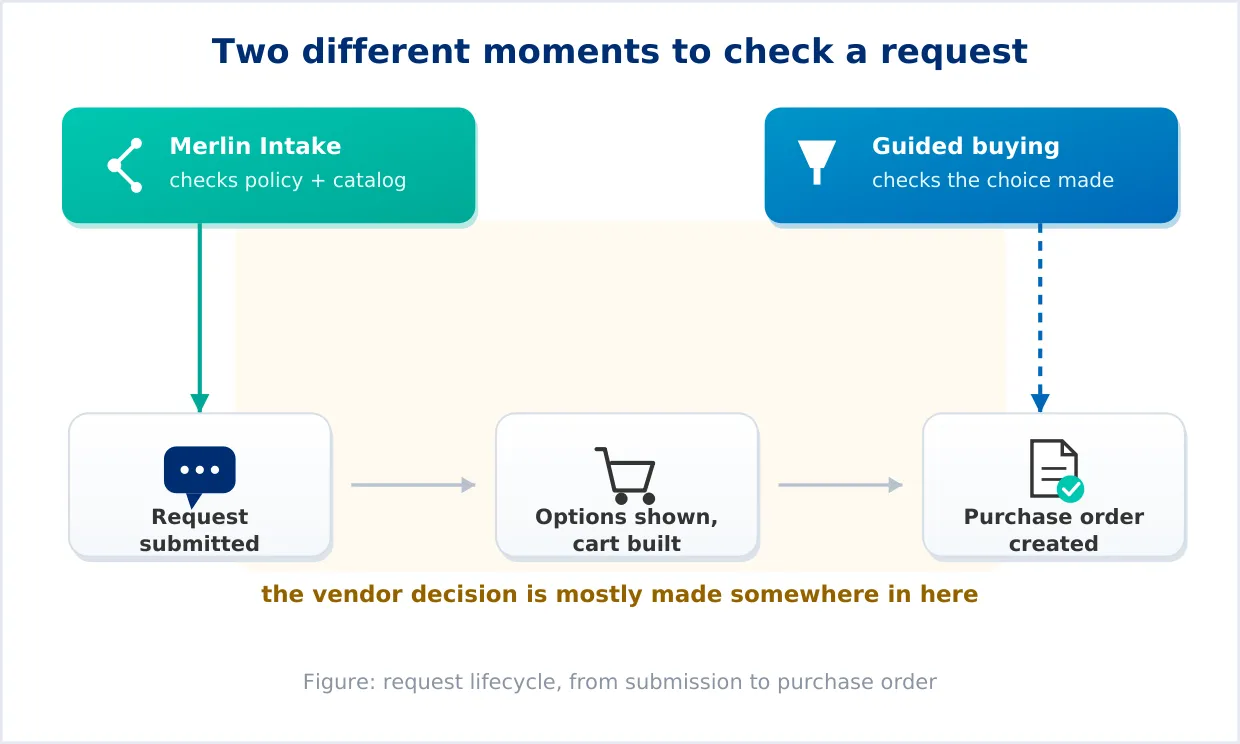
There is one important nuance. Guided buying is not tied to one fixed moment in the purchase lifecycle. Traditional implementations have often been catalog- and P2P-centric, while newer platforms increasingly extend guidance into procurement intake, non-catalog requests, sourcing requests, and supplier onboarding. That is why broad statements such as “guided buying only happens after a request takes shape” are too absolute. A better evaluation question is: when does the system check existing supply options, and can it stop an unnecessary new-supplier path before it starts?
Guided buying vs vendor consolidation: a practical comparison
| Dimension | Guided buying | Vendor / supplier consolidation | Intake-based routing / procurement orchestration |
| Objective | Guide users to compliant, preferred buying choices | Reduce unnecessary active suppliers and concentrate appropriate spend | Route demand to the right existing channel before new work is created |
| When it acts | Can act from intake through catalog, requisition, and purchase stages, depending on design | Across category strategy, sourcing, contracting, supplier governance, and renewal decisions | At the request or intake layer, before a new sourcing or supplier-onboarding path is opened |
| Primary KPI | Preferred-channel adoption, maverick spend, policy compliance, user adoption | Active supplier count, spend concentration, suppliers per category, new-supplier creation rate | Correct routing rate, request cycle time, spend under management, avoided duplicate requests |
| What it prevents | Off-policy purchases, wrong channels, unnecessary user effort | Excess supplier complexity, diluted leverage, duplicate relationships | Requests bypassing existing contracts, catalogs, preferred suppliers, or category rules |
| What it does not solve | It does not automatically decide the optimal size of the supplier base | It does not make the buying experience easy or ensure users follow the preferred path | It does not replace sourcing strategy, supplier selection, risk decisions, or category governance |
Can guided buying contribute to vendor consolidation?
Yes, but usually as an enabler rather than the whole consolidation strategy. If guided buying prioritizes preferred suppliers, makes existing contracts easy to find, and sends non-catalog requests through the right category rules, it can increase the share of spend that stays with the suppliers procurement has already chosen. That supports supplier consolidation by reducing the opportunities for unnecessary vendor creation.
The Hackett Group’s 2026 AI World Class Procurement research is useful here because it reports several outcomes side by side. AI World Class organizations show 110% greater guided buying and catalog adoption, 69% less maverick spend leakage, and 42% greater supplier concentration. The important reading is not “guided buying causes 42% supplier concentration.” The research shows that mature procurement organizations combine stronger buying guidance with stronger sourcing and supplier decisions. The Hackett Group research
That is the operating model procurement teams should aim for: guided buying to make preferred choices easy, strategic sourcing to decide which suppliers should be preferred, and procurement intake or orchestration to catch demand that does not fit neatly into a catalog before it becomes a new supplier request.
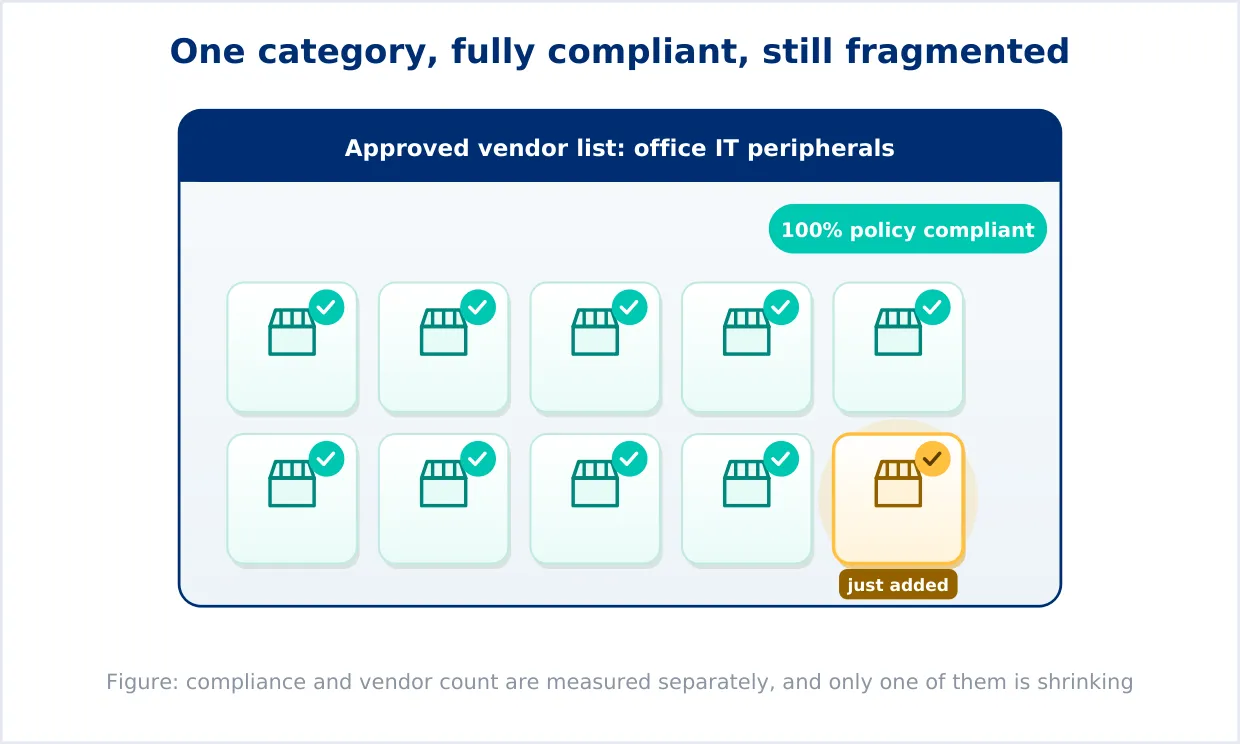
Figure 1: A catalog can be fully compliant and still contain a fragmented supplier base.
Why can compliant purchasing still leave you with too many vendors?
Compliance asks whether a transaction followed policy. Consolidation asks whether the organization is working with the right number and mix of suppliers over time. Those questions overlap, but they are not identical. A guided buying experience can produce excellent procurement compliance while an approved category still contains far more suppliers than the category strategy requires.
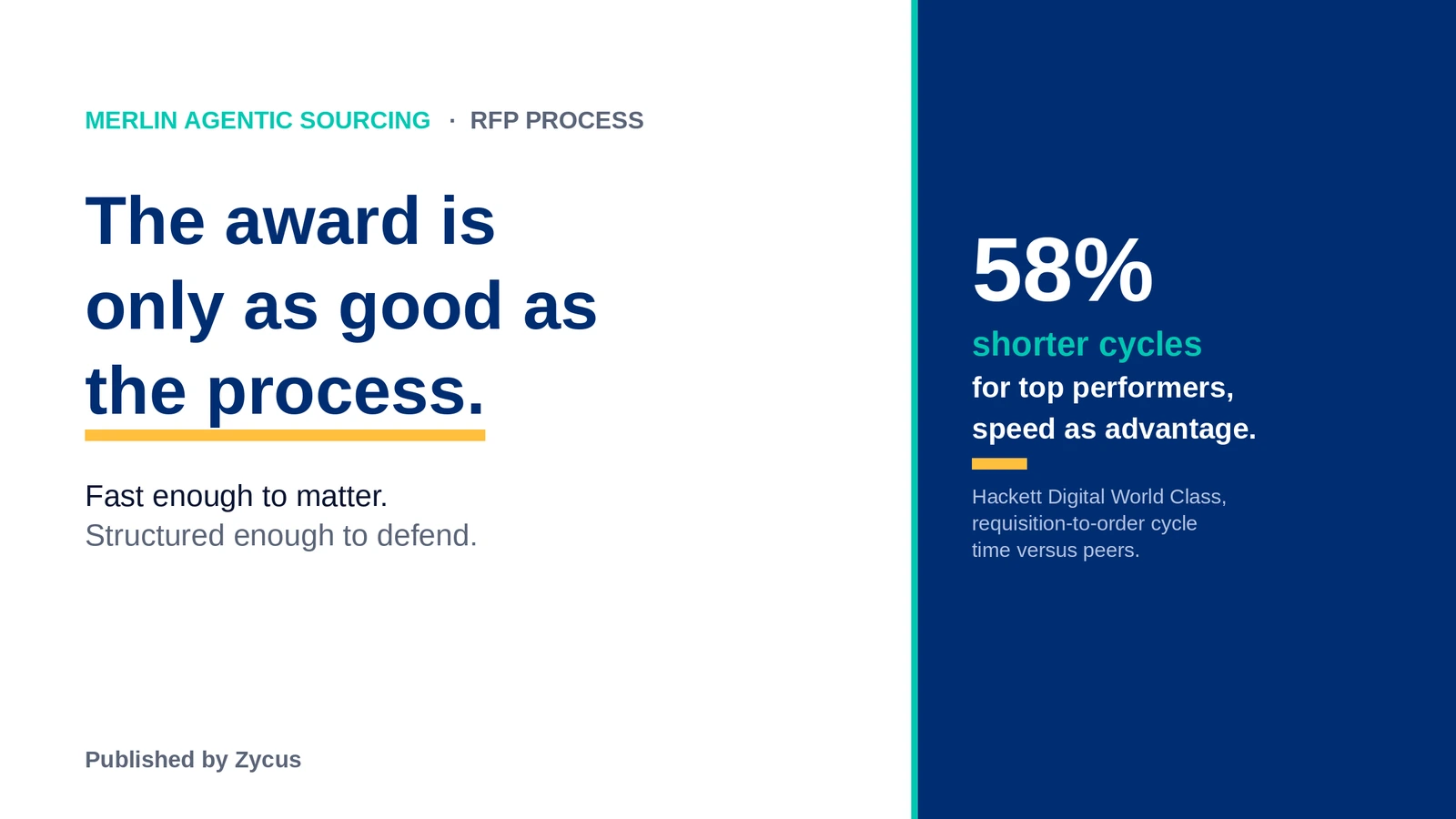
The Hackett Group’s Digital World Class procurement research found that top-performing teams reduce maverick buying and contract noncompliance enough to produce 60% less savings lost. That is meaningful value, but it remains primarily a compliance and value-protection metric. It does not tell a CPO whether the active supplier count went down, whether spend became more concentrated, or whether the organization stopped creating duplicate supplier relationships. Source
This is why some sourcing-led vendor consolidation programs struggle to hold their gains. The sourcing event can reduce the supplier list, but if later purchase requests can still create a legitimate path to another supplier without checking existing coverage first, the list can expand again without anyone technically breaking policy.
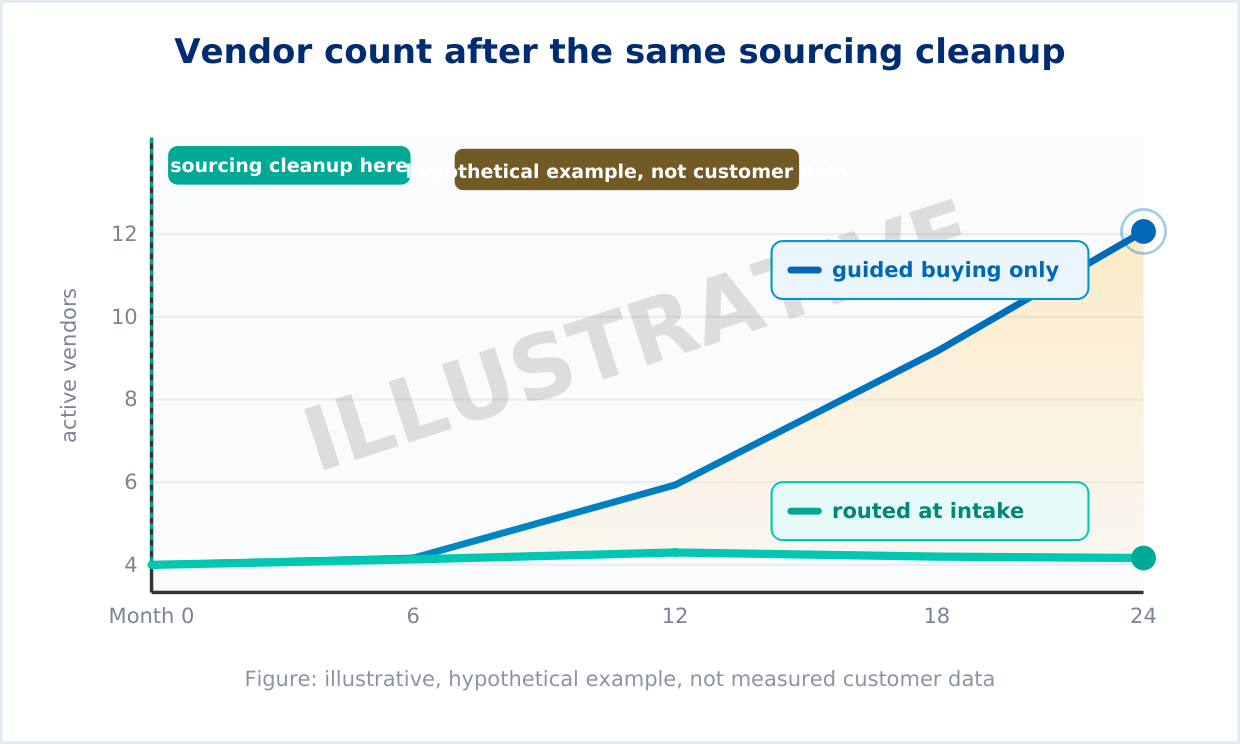
Worked example: how a compliant request can still expand the supplier base
Assume an IT category manager has just completed a supplier consolidation exercise and reduced office-peripheral suppliers from 12 to 4. Six months later, an employee needs a specialized docking station. The employee has a supplier in mind, and the request is legitimate. The risk is not that the employee is trying to create maverick spend. The risk is that the request can become a fifth supplier relationship before the organization checks whether one of the four preferred suppliers already has an acceptable equivalent.
| 1. Demand | Employee asks for a docking station that is not immediately visible in the catalog. |
| 2. Policy | The purchase can be completely in-policy. Compliance alone does not answer whether a new supplier is necessary. |
| 3. Check | An intake or orchestration layer checks current catalogs, contracts, preferred suppliers, and category rules before opening a new-supplier path. |
| 4. Route | If an existing supplier can meet the need, the request is routed there. If not, the request can move into sourcing or supplier onboarding with a clear reason. |
| 5. Measure | Procurement tracks both compliance and supplier outcomes: new-supplier creation rate, suppliers per category, and spend concentration. |
The example is illustrative, not measured customer data. The point is the decision sequence: supplier consolidation holds when a new-supplier request is treated as an exception that must first be compared with existing coverage, not simply as another compliant purchase path.
Where does vendor fragmentation actually get created?
Often, it starts before a purchase order is created, but intake is not the only source. Supplier sprawl can also come from acquisitions, decentralized business units, local sourcing, one-off project needs, weak contract visibility, duplicated supplier records, and deliberate resilience or diversity strategies. The goal should not be the smallest supplier count possible. It should be the removal of unnecessary fragmentation.
For day-to-day indirect procurement, procurement intake is one of the most important control points because it is where demand first becomes visible. Before a request moves into sourcing or supplier onboarding, the process should be able to ask: Do we already have a contracted supplier? Is there a suitable catalog item? Is the category covered by a preferred supplier? Has another business unit solved the same need? Does policy require a sourcing event?
If those questions are answered early, guided buying and procurement orchestration can work together. If they are answered late, procurement may still keep the transaction compliant, but it has fewer opportunities to prevent another supplier from entering the category.
How does Merlin Intake route requests differently?
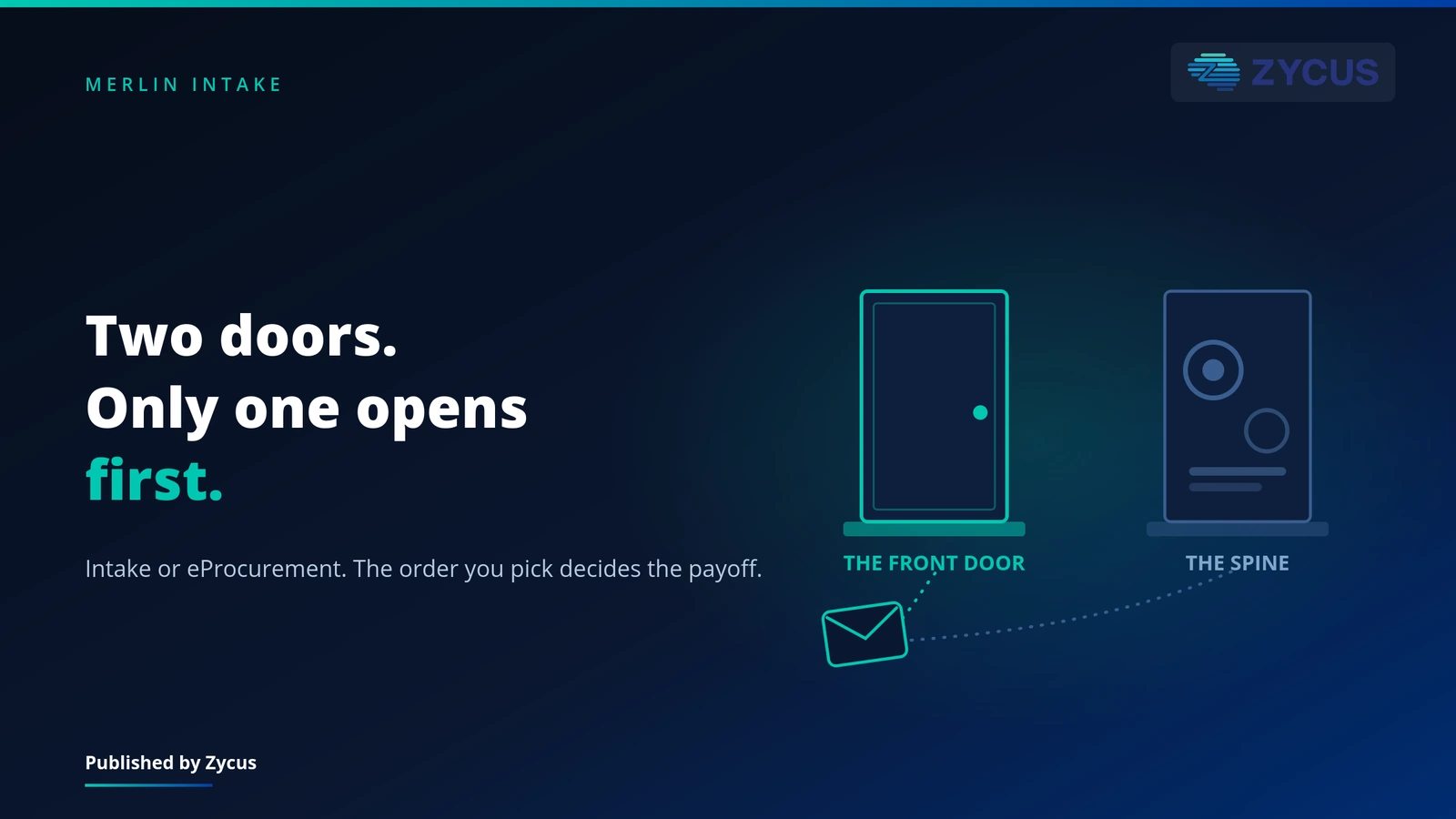
Zycus positions Merlin Intake as a front door for procurement requests rather than as a replacement for guided buying. A user can begin in a familiar interface such as Microsoft Teams, while the platform applies policy, catalog search, request classification, and configured routing behind the scenes. For cataloged demand, Zycus says its catalog layer can search across more than 1,200 punchout and hosted catalogs, including Amazon Business and Mercateo, through Merlin Intake and Microsoft Teams.
The distinction is therefore not “guided buying versus intake” as competing categories. The stronger architecture connects them. Guided buying makes the preferred choice easier. Intake-based routing determines which buying, sourcing, contracting, or supplier workflow the request should enter. Procurement orchestration keeps those decisions connected as the request moves downstream.
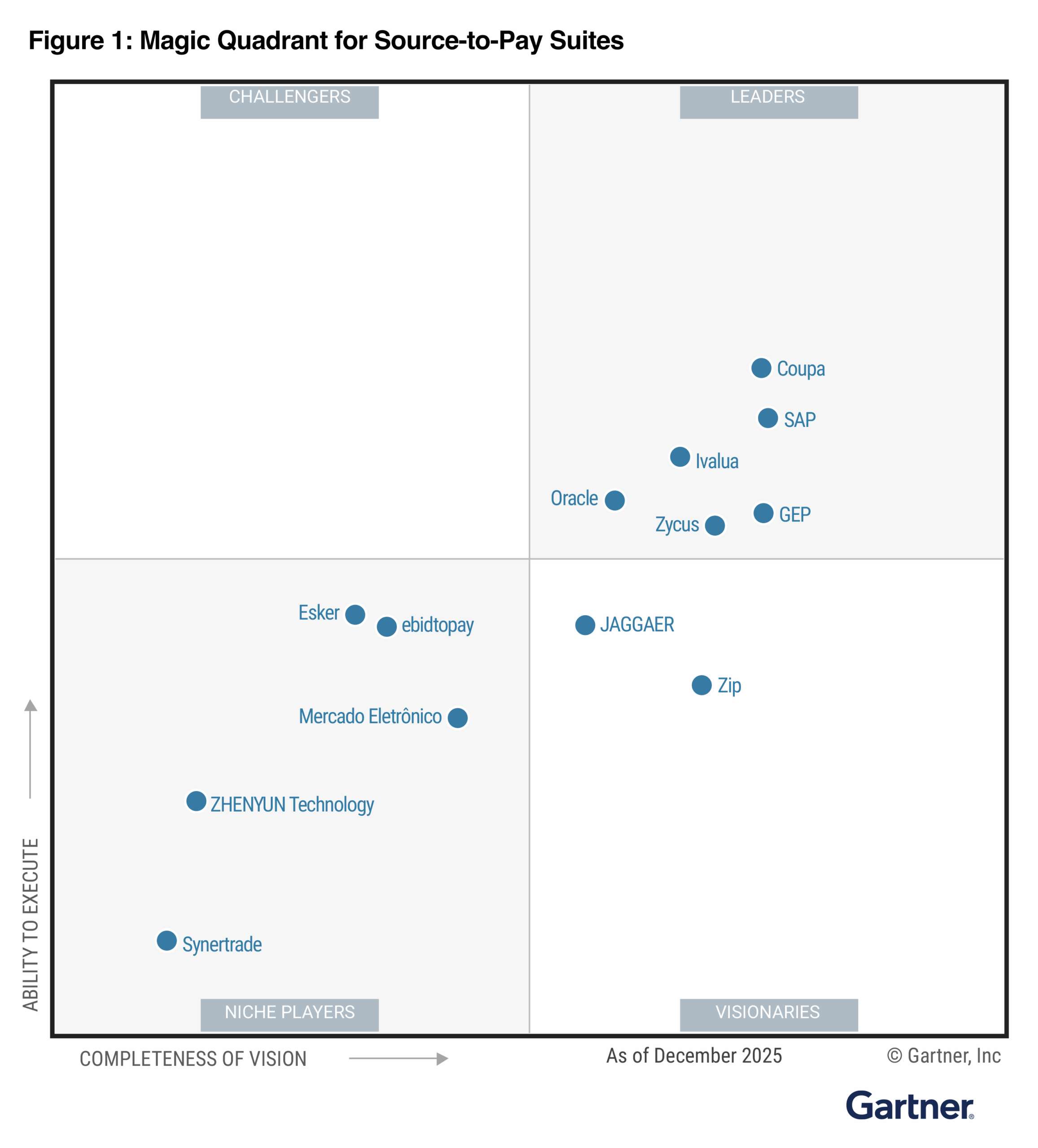
Zycus was named a Leader in the 2026 Gartner Magic Quadrant for Source-to-Pay Suites. Zycus links that recognition to its broader Source-to-Pay suite, Merlin Intake, and Agentic AI investment. The Gartner report evaluates S2P vendors at suite level, so it should not be used as proof of any single intake or vendor-consolidation claim.
Customer evidence: why the procurement front door matters
Zycus customer evidence supports the importance of adoption and consistent request routing, even though the public customer stories reviewed do not isolate vendor-count reduction as an intake metric. Delta Air Lines, for example, reports a 60% reduction in request cycle time and 10 procurement portfolios unified under a single Source-to-Pay framework in its Zycus customer story. Delta Air Lines customer story
Those results should not be presented as proof that guided buying or intake reduced Delta’s supplier count. They demonstrate a different prerequisite for consolidation: demand has to enter a governed, adopted process before category rules and preferred-supplier decisions can be applied consistently. A consolidation strategy that users routinely bypass will not hold, no matter how good the sourcing event was.
What changes when routing happens earlier in the request?
Earlier routing expands procurement’s chance to influence the request before a new buying path becomes the default. Zycus reports aggregate customer benchmarks showing a 20% improvement in spend under management where Merlin Intake is deployed. Spend under management is useful because it measures how much spend procurement can see or influence, but it is not the same as vendor consolidation.
If the business case is supplier consolidation, measure supplier outcomes directly. Track active suppliers, new suppliers created each month, suppliers per category, spend concentration with preferred suppliers, and the share of new-supplier requests that were redirected to an existing option. That avoids a common measurement error: using a compliance KPI as a proxy for a consolidation result.
How should procurement teams evaluate guided buying across the market?
Do not evaluate a product only by whether it uses the phrase “guided buying.” Modern platforms use that label differently. Instead, test the operating model with a real non-catalog request and ask five questions:
- At what point does the platform check existing contracts, catalogs, preferred suppliers, and prior demand?
- What happens when there is no catalog match? Does the request go to sourcing, supplier onboarding, a category manager, or a generic queue?
- Can the system distinguish a legitimate exception from an unnecessary new-supplier request?
- Does it connect procurement intake, approvals, sourcing, supplier management, contracts, and P2P without losing context?
- Can procurement measure both buying compliance and supplier-base outcomes instead of treating them as the same KPI?
This is the difference between a helpful recommendation and a control model. The recommendation improves a decision. The control model makes sure the right decision is being made at the right stage with the right supplier and category context.
Where does intake-based routing have real limits?
Intake-based routing can reduce the number of avoidable paths into new suppliers, but it does not replace category strategy. Routing can enforce a preferred-supplier decision; it cannot determine by itself which suppliers should be preferred, how many suppliers a category needs, or whether resilience, innovation, geography, regulation, or supplier diversity justifies a broader supply base.
Organizations with an already fragmented vendor base still need supplier consolidation work through sourcing, contract rationalization, supplier offboarding, and category governance. The role of guided buying and procurement intake is to help those gains hold after the cleanup by making existing supply options visible and routing legitimate exceptions through a controlled path.
The most useful principle is therefore not “fewer vendors at any cost.” It is “fewer unnecessary vendors, with every new supplier added for a clear business reason.” That is where supplier consolidation, guided buying, procurement compliance, and procurement orchestration become one operating model instead of four separate initiatives.
Want to see how Zycus connects procurement intake, guided buying, sourcing, and supplier workflows? Request a demo
Frequently Asked Questions
Q1. Does guided buying reduce the number of vendors a company uses?
Not by itself. Guided buying can increase use of approved and preferred suppliers, which may support vendor consolidation, but the supplier base only shrinks when sourcing strategy, supplier governance, and new-supplier controls also reduce unnecessary relationships.
Q2. What is the difference between guided buying and vendor consolidation?
Guided buying is a buying experience and control mechanism that steers users toward compliant choices. Vendor consolidation or supplier consolidation is a strategic outcome: fewer unnecessary active suppliers and more appropriate spend concentration with preferred partners.
Q3. Can guided buying contribute to supplier consolidation?
Yes. It can support supplier consolidation by making preferred suppliers and contracts easier to use and by reducing off-channel purchasing. It does not, on its own, decide which suppliers should be removed or prevent every new supplier from being created.
Q4. Does guided buying always happen after a request takes shape?
No. Guided buying capabilities vary by platform. Some are centered on catalog and requisition experiences, while newer approaches extend into procurement intake and non-catalog requests. The better question is where the supplier and policy checks run in the specific workflow.
Q5. What is maverick spend, and how is it different from vendor fragmentation?
Maverick spend is spend that bypasses approved processes, suppliers, contracts, or policies. Vendor fragmentation can exist even when purchases are compliant, because an organization may have too many approved suppliers in the same category or keep adding legitimate new suppliers without consolidating demand.
Q6. Why do vendor lists grow back after a sourcing-led consolidation project?
A sourcing event can rationalize the existing supplier base, but the gains can erode if later requests, local buying, acquisitions, or supplier-onboarding decisions keep creating new relationships. Sustaining consolidation requires ongoing governance, not a one-time cleanup.
Q7. Can catalog integration alone reduce vendor sprawl?
It can help by making preferred options easier to find, but catalog coverage is rarely complete. Non-catalog demand still needs a route that checks existing suppliers, contracts, category strategy, and sourcing requirements before a new vendor is introduced.
Q8. Which KPIs should procurement track for vendor consolidation?
Track active supplier count, suppliers per category, new-supplier creation rate, spend concentration with preferred suppliers, tail-spend concentration, supplier offboarding, and the percentage of new-supplier requests redirected to an existing option. Use procurement compliance and spend under management as complementary metrics, not substitutes.
Sources and evidence used in this article
- The Hackett Group: AI World Class Procurement benchmarks (2026): 110% greater guided buying/catalog adoption, 69% less maverick spend leakage, 42% greater supplier concentration.
- The Hackett Group: Digital World Class Procurement research: 60% less savings lost from maverick buying and contract noncompliance among top-performing teams.
- Zycus Catalog Management: 1,200+ punchout and hosted catalogs searchable through Merlin Intake and Microsoft Teams.
- Zycus: Agentic AI procurement use cases: Vendor-published aggregate benchmark of +20% improvement in spend under management where Merlin Intake is deployed.
- Delta Air Lines procurement transformation with Zycus: 60% reduction in request cycle time and 10 procurement portfolios unified under one S2P framework.
- 2026 Gartner Magic Quadrant for Source-to-Pay Suites: Suite-level S2P market research; Zycus is included in the 2026 evaluation.