








The three-way match exceptions rate looks like an AP problem. The gap between a clean match and a flagged invoice is usually set at intake, before a purchase order even exists.
TL;DR
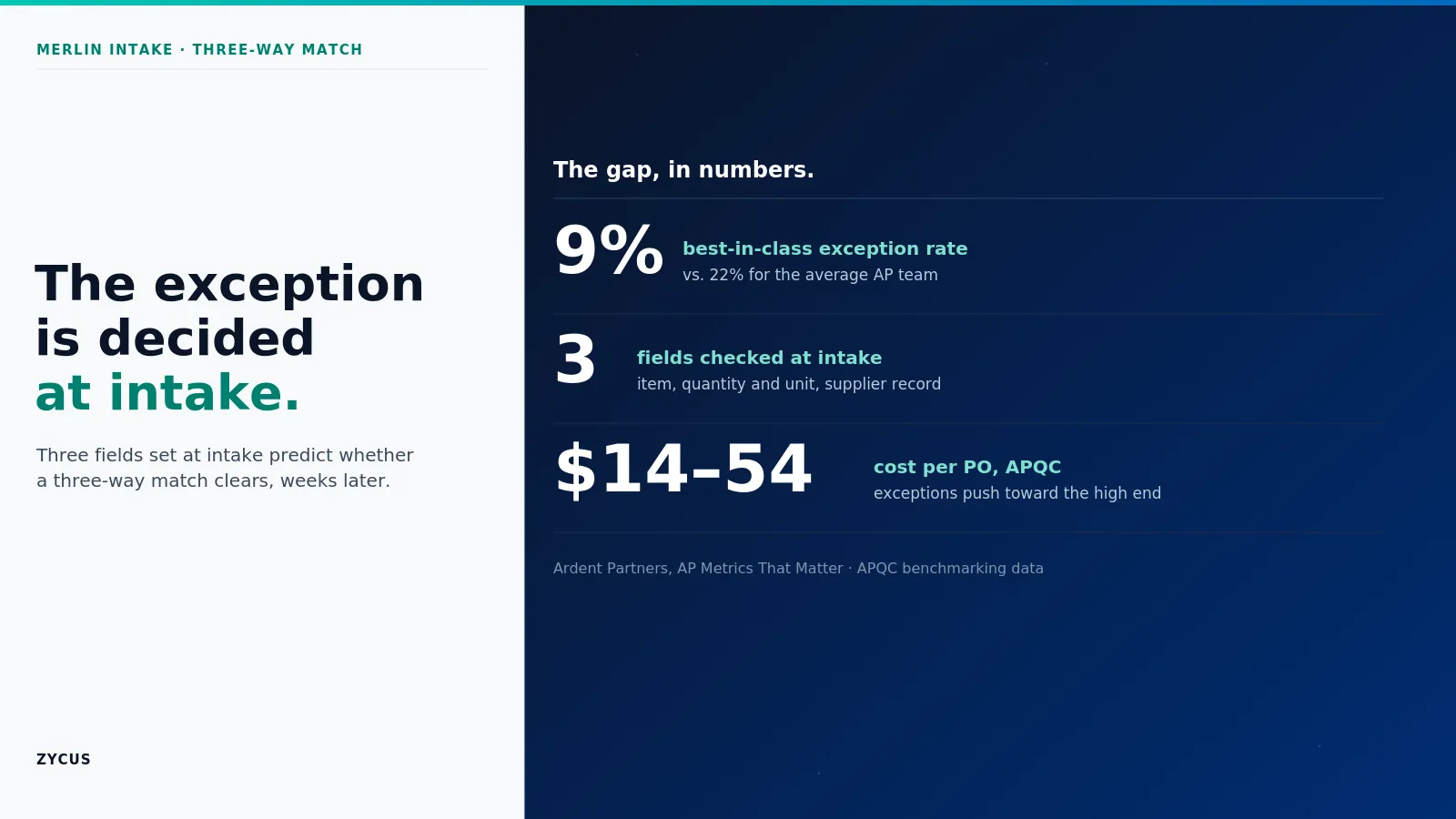
- Ardent Partners’ AP Metrics That Matter in 2025 found best-in-class AP teams run a 9 percent invoice exception rate, against 22 percent for the average organization.
- That 13-point gap is rarely a matching-engine problem. It is a data-quality problem, and most of the data in question was captured at intake, not at AP.
- Three intake fields predict match readiness before a PO is even issued: item description specificity, quantity unit consistency, and supplier record accuracy.
- APQC benchmarking data puts the cost of processing a single purchase order between roughly 14 and 54 dollars, a range exceptions push toward the high end.
- A readiness scorecard run at intake catches the same problems a three-way match would catch anyway, just before a PO exists instead of after an invoice does.
- See how Merlin Intake and AP SmartDesk share one policy engine end to end. Request a demo →
Weeks before, usually. An intake form that captures a vague item description, an inconsistent unit of measure, or a supplier record that does not match what accounts payable has on file is not a three-way match problem yet. It becomes one the moment a receipt or invoice arrives and the systems cannot agree on what was actually ordered.
Ardent Partners’ AP Metrics That Matter in 2025 found best-in-class AP teams run a 9 percent invoice exception rate. The average organization runs 22 percent.
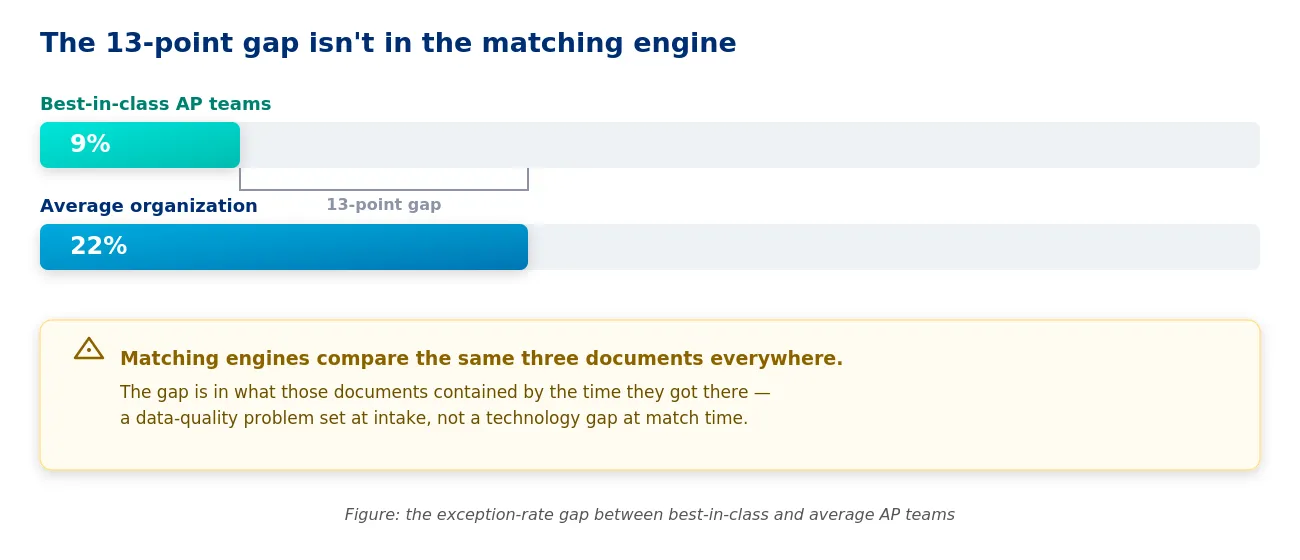
That is not a 13-point gap in matching software. Matching engines compare the same three documents everywhere. The gap is in what those documents contained by the time they reached the matching step, and the earliest of the three, the purchase order, traces directly back to whatever the intake form captured.
What actually causes a three-way match exception?
Four patterns account for most of them: price variances between the PO and the invoice, quantity mismatches from partial or consolidated shipments, missing purchase orders for spend that should have gone through intake but did not, and data entry errors from manual re-keying somewhere in the chain. Three of the four trace back to what happened before the PO existed, not to anything the matching engine did wrong.
A price variance often means the intake form let a requester describe an item generically enough that it matched to the wrong catalog line or contract price, pulling in a rate that was never actually negotiated for that specific item. A missing PO usually means the request bypassed structured intake entirely, arriving as an email or a verbal ask that never generated the paper trail a matching engine needs to work against. Manual re-keying errors multiply every time information has to be typed again because the previous system did not capture it in a reusable format, each re-entry point is another chance for a transposed digit or a misread unit to enter the record. The matching step just surfaces problems that were already there, days or weeks earlier.
Which intake fields actually predict match readiness?
Three matter more than the rest. Item or service description specificity: a generic description like “consulting services” forces AP to guess which contract and rate apply, while a specific one tied to a catalog or contract line carries pricing and terms with it automatically, removing the guesswork before it can become a variance. Quantity and unit-of-measure consistency: intake forms that let a requester enter “12” without specifying units create ambiguity a receiving document and an invoice may resolve differently, one system assuming cases, another assuming individual units, with nobody catching the mismatch until payment is already blocked.
Supplier record accuracy: a request routed to a supplier name typed freehand, rather than selected from a verified master record, is one of the most common sources of a downstream mismatch that has nothing to do with the actual transaction, the goods were correct, the price was correct, but the system cannot reconcile “Acme Corp” against “Acme Corporation” without a human stepping in to confirm they are the same vendor.
None of these are AP’s fields to fix. All three are set at the moment a request is made, which puts them squarely inside intake, not inside the matching step where the exception eventually surfaces, often weeks after the decision that actually caused it.
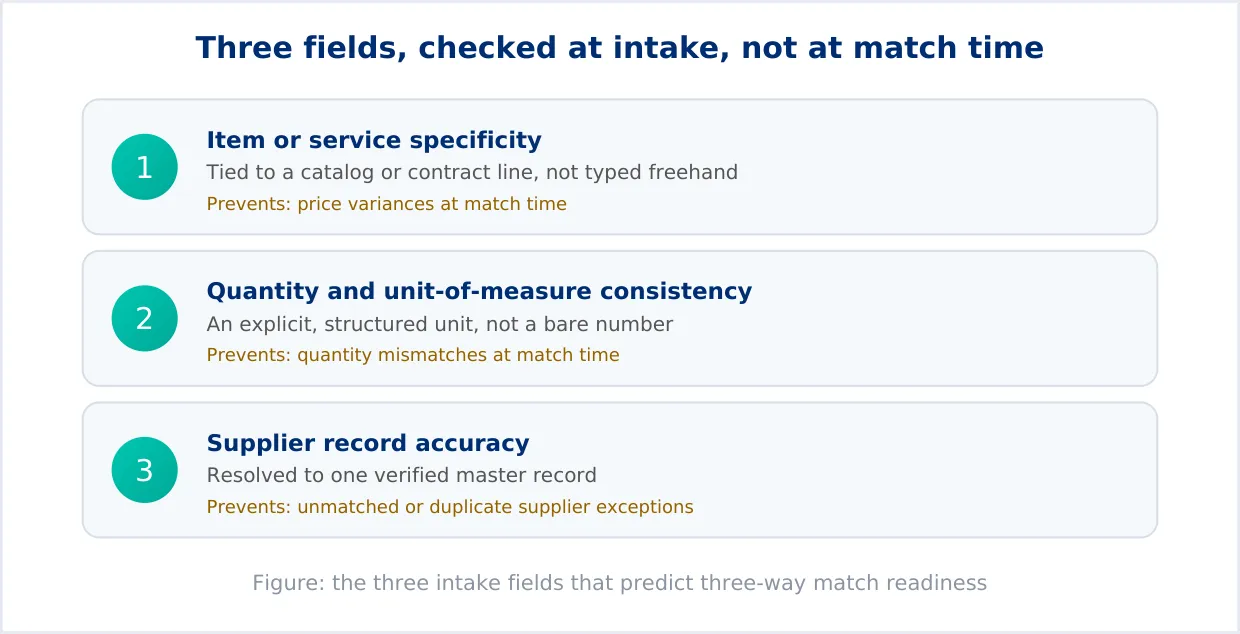
Figure 1: the three intake fields that predict match readiness.
What does a readiness scorecard actually check?
The same three fields, scored before a requisition becomes a purchase order rather than after an invoice fails to match one: is the item or service tied to a catalog or contract line rather than described freehand, is the quantity captured with an explicit, consistent unit of measure, and does the supplier resolve to a single verified master record rather than a name a requester typed in. A request that clears all three has a materially lower chance of generating a downstream exception than one that clears none of them, and a team that starts tracking the score has a leading indicator of exception rate instead of a lagging one, something that shows up in weeks rather than the following month’s AP report.
APQC benchmarking data puts the cost of processing a single purchase order between roughly 14 and 54 dollars, a range the research attributes to how procurement work is structured and executed. An exception does not just cost AP’s time; it pushes that same purchase order toward the expensive end of the range, since a flagged invoice requires the PO to be reopened, re-checked, and often re-touched by procurement as well as AP before payment can proceed.
How does Merlin Intake connect to what happens in AP?
This is where Merlin Intake and AP SmartDesk share more than a name. Because both run on the Merlin Agentic AI Platform, a request captured at intake, catalog-matched, supplier-verified, quantity-structured, is the same record AP SmartDesk checks the invoice and receipt against later. There is no re-entry step where a cleanly captured request degrades into an ambiguous one, which is the gap that opens up when intake and AP run on separate, disconnected systems that only exchange a static PO number and lose everything else about how the request was originally shaped.
Hackett Group’s 2026 Procurement Key Issues research found 76 percent of organizations report AI-driven improvements of 25 percent or more in key performance metrics once adoption scales past initial pilots, a pattern consistent with what happens when intake and AP stop being two separately configured systems and start sharing one record of a request from submission through payment, rather than each side maintaining its own partial version of the truth.
Can automation fix a high exception rate without touching intake?
Partially, and only up to a point. AI-assisted matching can resolve exceptions faster once they occur, applying tolerances, flagging the specific field that failed, and routing it to the right owner instead of a generic queue where it waits for whoever gets to it next. What it cannot do is stop a vague item description or an unverified supplier name from creating the exception in the first place, because by the time matching runs, the ambiguity is already baked into three separate documents that all have to somehow agree.
Faster exception handling is a real improvement, and worth doing regardless. It is not the same as a lower exception rate, and organizations that only invest in matching-side automation tend to plateau, processing the same volume of exceptions more efficiently rather than generating fewer of them in the first place. The two investments solve different problems and are easy to mistake for each other.
Where does this approach have real limits?
A readiness scorecard at intake will not catch every exception. Genuine partial shipments, legitimate supplier price increases mid-contract, and receiving errors on the warehouse floor happen regardless of how clean the original request was, and those still need a real matching and exception-resolution process downstream, no amount of intake discipline prevents a truck arriving with 90 of the 100 units that were ordered. Intake-side readiness narrows the exceptions that were preventable. It does not eliminate the category of exception entirely, and treating it as a full replacement for matching discipline downstream would be a mistake.
Frequently Asked Questions
Q1. What is a three-way match exception?
An exception occurs when the purchase order, the goods receipt, and the invoice do not agree within an acceptable tolerance on price, quantity, or another checked field, requiring manual review before payment can proceed.
Q2. What is a good three-way match exception rate?
Ardent Partners’ 2025 research found best-in-class AP teams run a 9 percent exception rate, against a 22 percent average across all organizations, a useful benchmark to measure your own rate against.
Q3. Can better intake forms actually reduce invoice exceptions?
Yes, for the exceptions caused by ambiguous item descriptions, inconsistent units of measure, or unverified supplier names, which are set at the point of request and simply surface later at matching. Genuine shipment and receiving discrepancies still require downstream exception handling regardless of intake quality.
Q4. What intake fields matter most for match readiness?
Item or service specificity tied to a catalog or contract line, consistent quantity and unit-of-measure capture, and supplier records resolved to a single verified master rather than free-text entry.
Q5. Does automating invoice matching reduce the exception rate?
It typically speeds up how exceptions are resolved rather than reducing how many occur, since the matching step only surfaces problems that were already present in the underlying data.
Q6. How much does a three-way match exception cost?
There is no single universal figure, but APQC benchmarking puts total purchase order processing cost between roughly 14 and 54 dollars, and an exception pushes a given PO toward the higher end of that range through rework and re-verification.
Q7. How does Merlin Intake reduce three-way match exceptions?
By capturing catalog-matched, supplier-verified, quantity-structured requests at the point of submission, on the same platform AP SmartDesk later checks invoices and receipts against, removing the re-entry step where a clean request can degrade before it reaches matching.
Q8. Is a high exception rate always an AP problem?
Usually not. Most common exception causes, vague item descriptions, unverified suppliers, inconsistent units, trace back to what was captured at intake, before AP or the matching engine ever sees the transaction.