








As enterprise procurement teams deploy AI agents to handle multi-step sourcing workflows, balancing decision-making autonomy with strict organizational control has become a top priority. Robust policy enforcement in agentic sourcing ensures that autonomous agents negotiate, evaluate bids, and execute actions strictly within predefined approval limits, risk thresholds, and compliance frameworks. Without native guardrails, delegating tasks to AI risks off-policy spend, contract exposure, and audit failures. By embedding governance directly into the agent’s execution layer, enterprise supply chain leaders can scale AI autonomy while remaining in complete control. When an agent can act on its own, policy cannot live in a PDF. It has to live in the flow. Here is how enforcement actually works when the system, not a reviewer, is doing the buying.
TL;DR
- Autonomous agents act faster than any reviewer can check, so policy enforced after the fact enforces nothing.
- McKinsey finds security and risk are the top barrier to scaling agentic AI for nearly two-thirds of organizations, while only about a third have mature controls.
- The fix is proportional, built-in enforcement: scoped access, compliance gates, and human checkpoints inside the agent’s flow, not bolted on around it.
- Merlin Agentic Sourcing runs policy as gates inside the sourcing flow: approved-vendor checks, compliance validation, and preserved human checkpoints at supplier selection, negotiation, and award.
When a sourcing agent can research suppliers, build an event, and model an award on its own, the old model of policy enforcement stops working. A policy written in a document and checked at a quarterly audit assumes a human paused to read it. An autonomous agent does not pause. It acts at a speed and scale no reviewer can keep up with, which means enforcement has to move from after the decision to inside it.
Why does policy enforcement get harder when AI agents act autonomously?
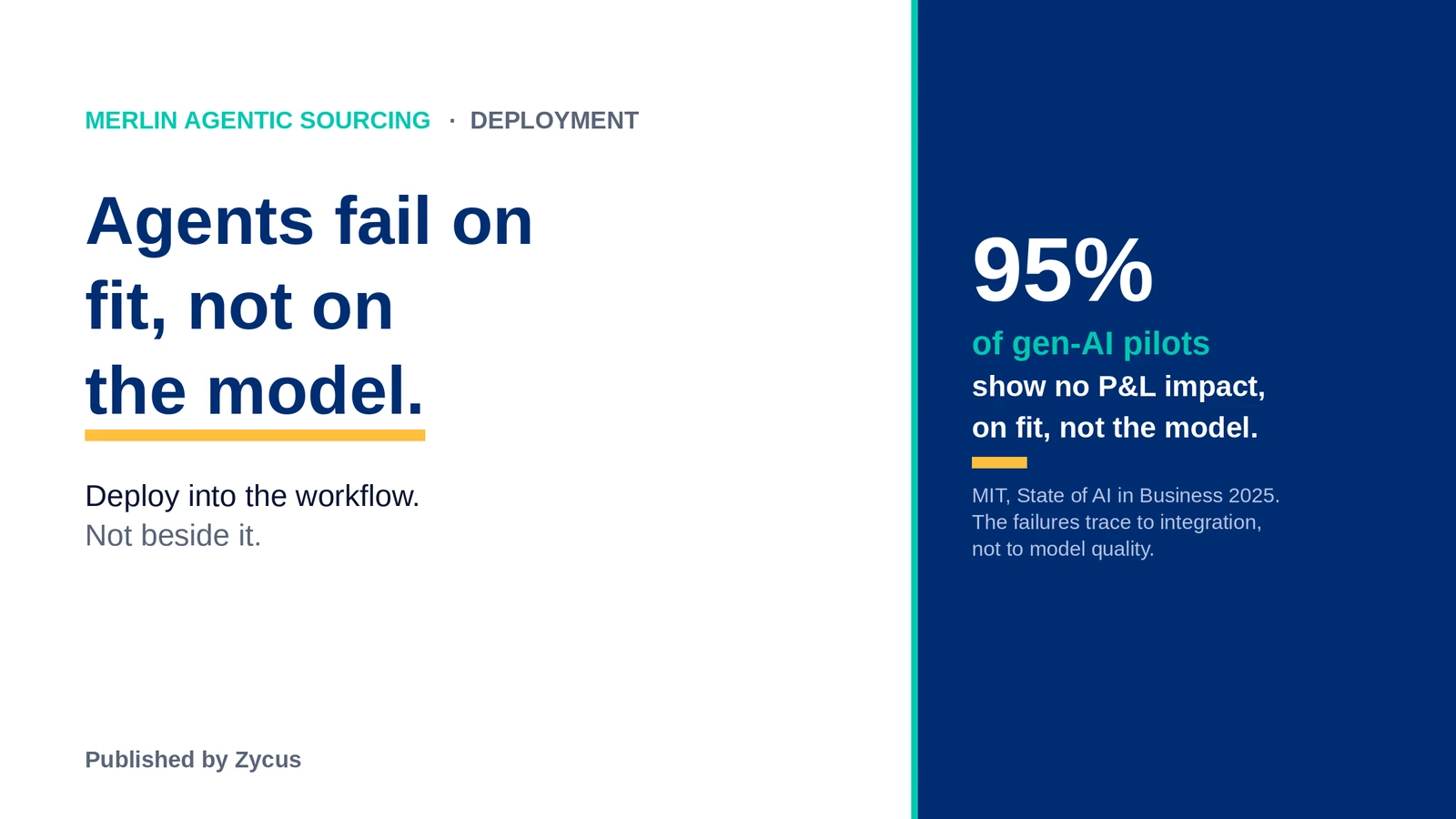
Because the checkpoint disappears. In a manual process, policy is enforced by people: a category manager confirms the supplier is on the approved list, a compliance officer signs off before award. Each of those pauses is an enforcement point. When an agent runs the sequence end to end, those pauses are gone unless they were deliberately built in. The risk is not hypothetical. McKinsey‘s 2026 AI Trust Maturity Survey found that security and risk are the single biggest barrier to scaling agentic AI for nearly two-thirds of organizations, and that only about a third have mature governance and controls for autonomous agents.
That is the pattern to avoid: agents that act faster than the controls around them, so enforcement is discovered to be missing only after the agent has already acted. The lesson is that autonomy and governance have to be designed together, not sequenced one after the other. In a health system the stakes sharpen the point, because an unvetted supplier is not only a savings leak but a patient-safety and data-privacy exposure, and a contract that skips a required certification can put the organization out of compliance with its own regulatory obligations.
What breaks when you bolt governance on after the fact?
Two things, and both are common. The first is that retrofitted controls tend to be uniform, the same lockdown applied to every action regardless of its risk. That over-restricts low-stakes steps, which slows everything down and pushes users to work around the system, while still under-controlling the genuinely risky actions. The second is that governance simply lags. In its 2026 State of AI in the Enterprise report, Deloitte surveyed more than three thousand technology and business leaders and found that only 21% said their organization had a mature governance model for agentic AI, even as agent usage scaled quickly. Adoption is running ahead of control. Bolting enforcement on afterward is how that 21% becomes an incident: the control that was never built in fails at exactly the moment an autonomous agent needs it.
Read More About Bolt-On vs Built-In: The Architecture Behind Sustainable Automation
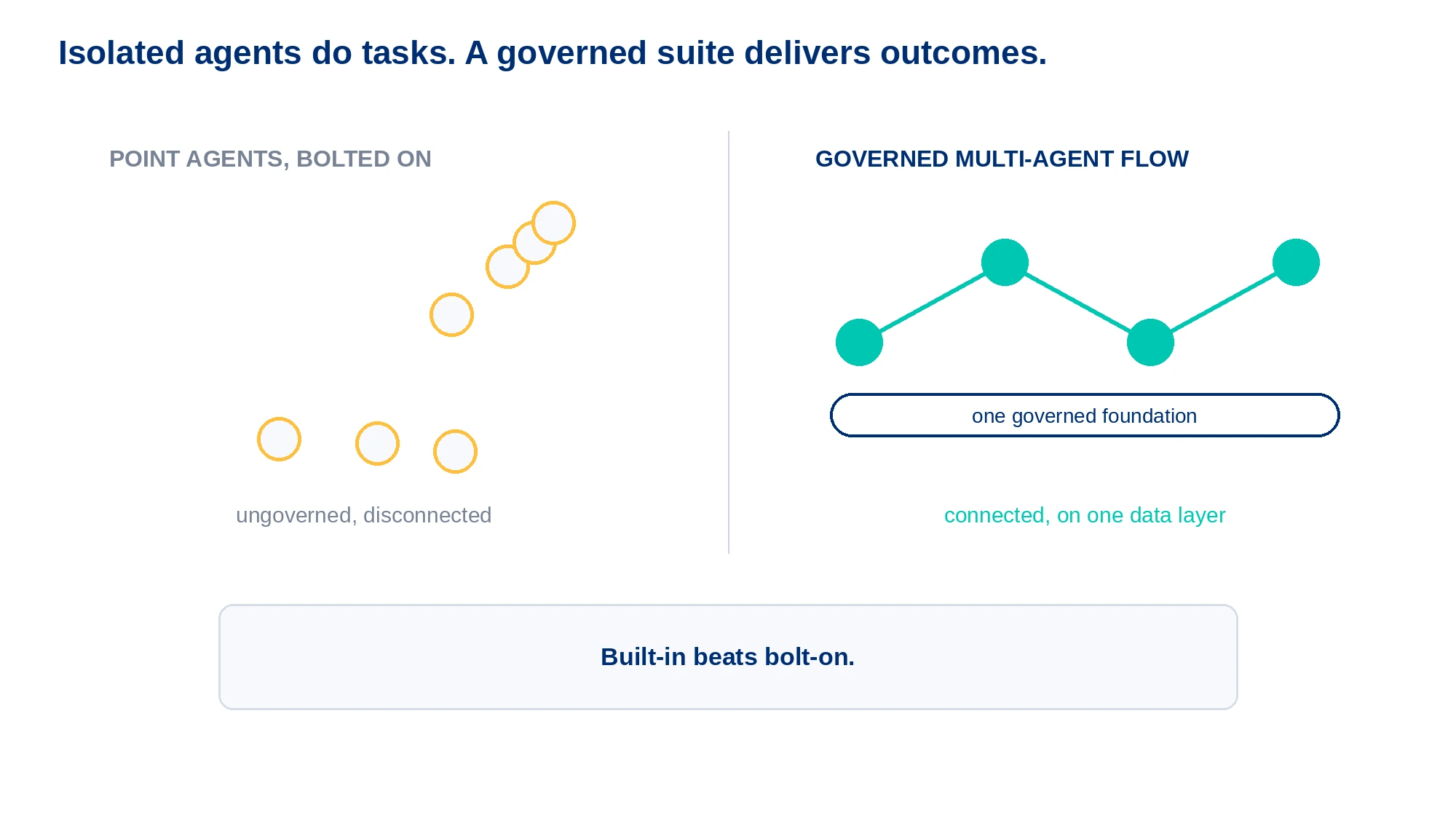
Figure 1. Bolted-on point agents are ungoverned and disconnected. A governed multi-agent flow runs on one foundation, which is why built-in beats bolt-on.
What does policy enforcement by design actually mean?
It means the rule is not a document the agent is trusted to remember. It is a gate the agent cannot pass without satisfying. Enforcement by design has three properties. It is proportional: a step that only reads data needs light control, while a step that commits the organization to a supplier needs a hard stop. It is embedded: the check runs at the moment of the action, inside the flow, not in an audit weeks later. And it is legible: every gated decision leaves a record a human can review, so accountability survives even when the agent acted alone. Policy that lives in the flow is enforced by construction. Policy that lives in a PDF is enforced by hope.
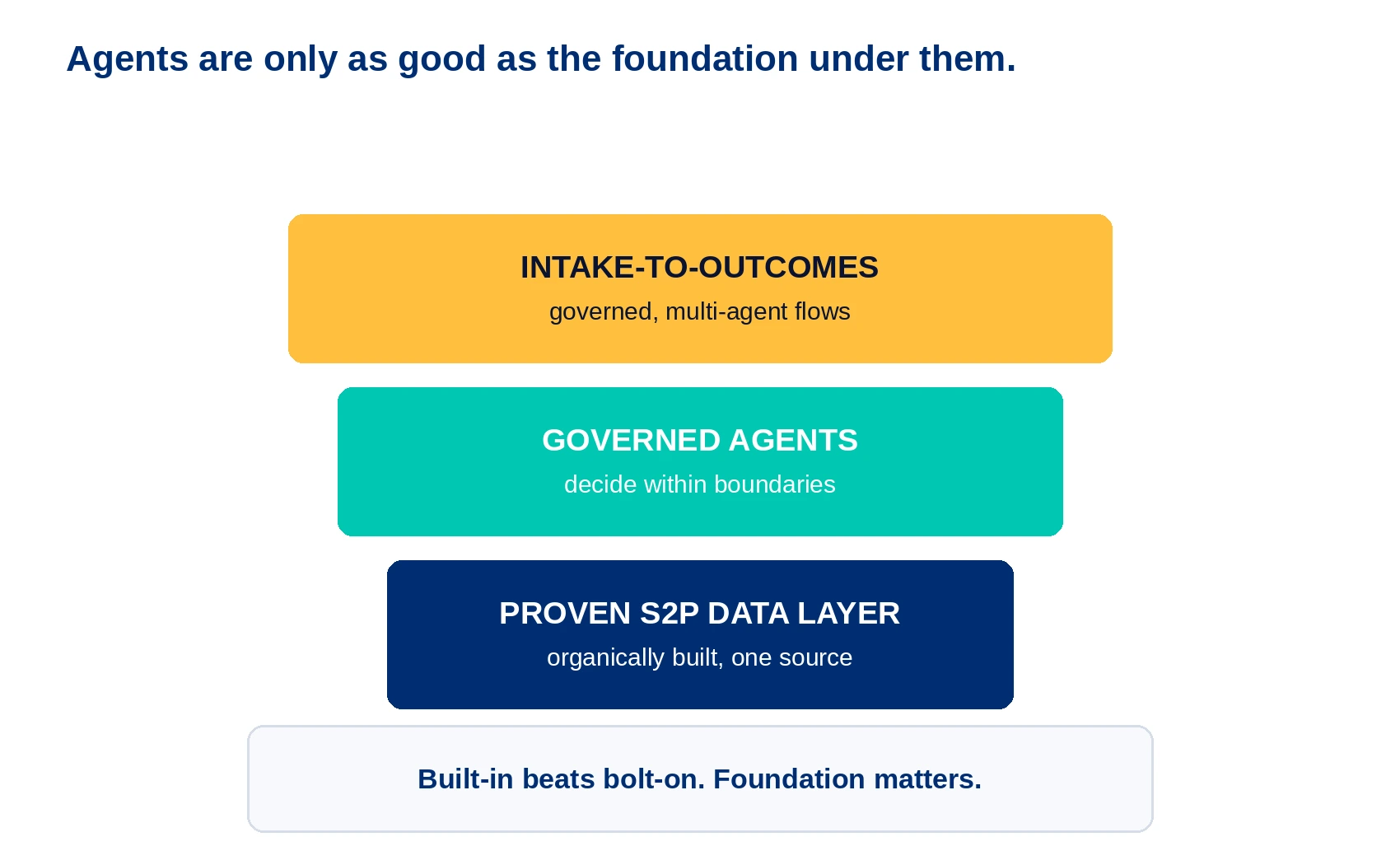
Figure 2. Enforcement by design rests on a proven foundation: a governed data layer beneath the agents, not policy bolted on above them.
Which controls does an autonomous sourcing agent actually need?
Start from the actions the agent takes and attach a control to each. Reading spend data or drafting an event needs scoped data access and a clean audit log, little more. Recommending a supplier shortlist needs a check against the approved vendor list and the organization’s risk and compliance criteria, so an unqualified or unvetted supplier cannot advance. Committing to a supplier, approving a negotiation position, or issuing an award are the high-stakes actions, and each of those needs a hard human checkpoint, not a notification the agent can proceed past.
Between those extremes sit the checks most people forget to specify: a spend threshold above which a second approver is required, a category rule that routes certain purchases through a named clinical or legal reviewer, and a data-access boundary that keeps the agent from seeing information it has no reason to use. The principle is to match the strength of the control to the consequence of the action, so simple steps stay fast and consequential steps stay governed, and to write each control down as a gate rather than as guidance the agent is trusted to follow.
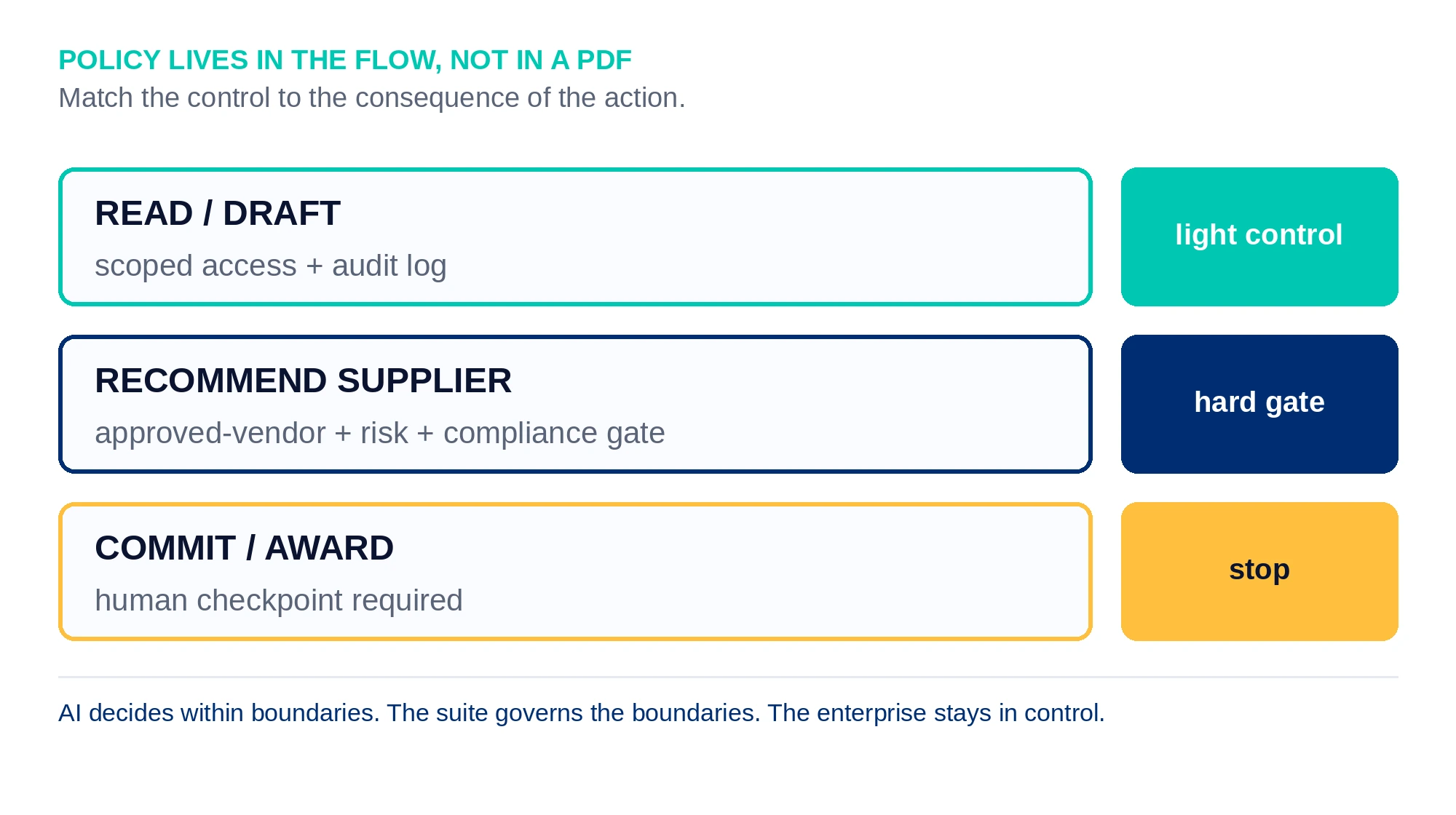
Figure 3. Proportional control: light checks on low-risk steps, hard gates on supplier recommendations, and a human checkpoint on anything that commits the organization.
How does agentic sourcing enforce policy inside the flow?
This is where the design shows up in the product. Merlin Agentic Sourcing runs a sourcing category from problem statement to award, and it treats policy as gates inside that flow rather than as an external review. Supplier discovery runs against approved-vendor list checks and financial and risk screening, so suppliers that fail the organization’s criteria do not advance. Compliance validation runs on the event before it goes to suppliers. Where the organization weights environmental and social criteria, that weighting is applied inside the supplier ranking rather than remembered afterward.
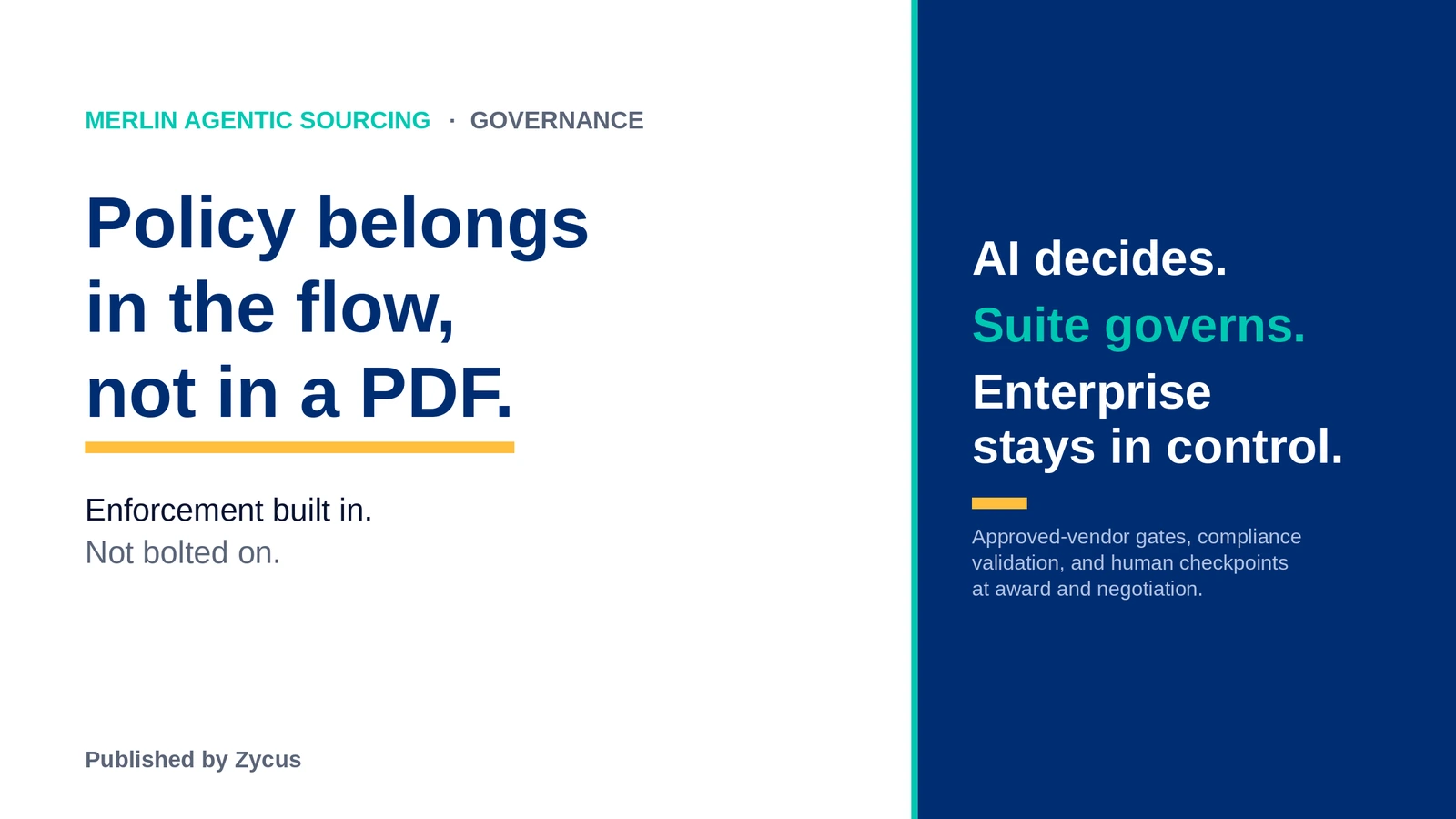
Because both the strategy and execution phases run on one data layer, a supplier that fails a check at discovery does not quietly reappear later in the event, which is the kind of gap a bolted-on control tends to miss. And the consequential decisions stay with people: supplier selection, negotiation approval, and the final award remain human checkpoints even when the rest of the sequence runs autonomously. The design goal is the one Zycus states plainly, that the AI decides within boundaries, the suite governs those boundaries, and the enterprise stays in control.
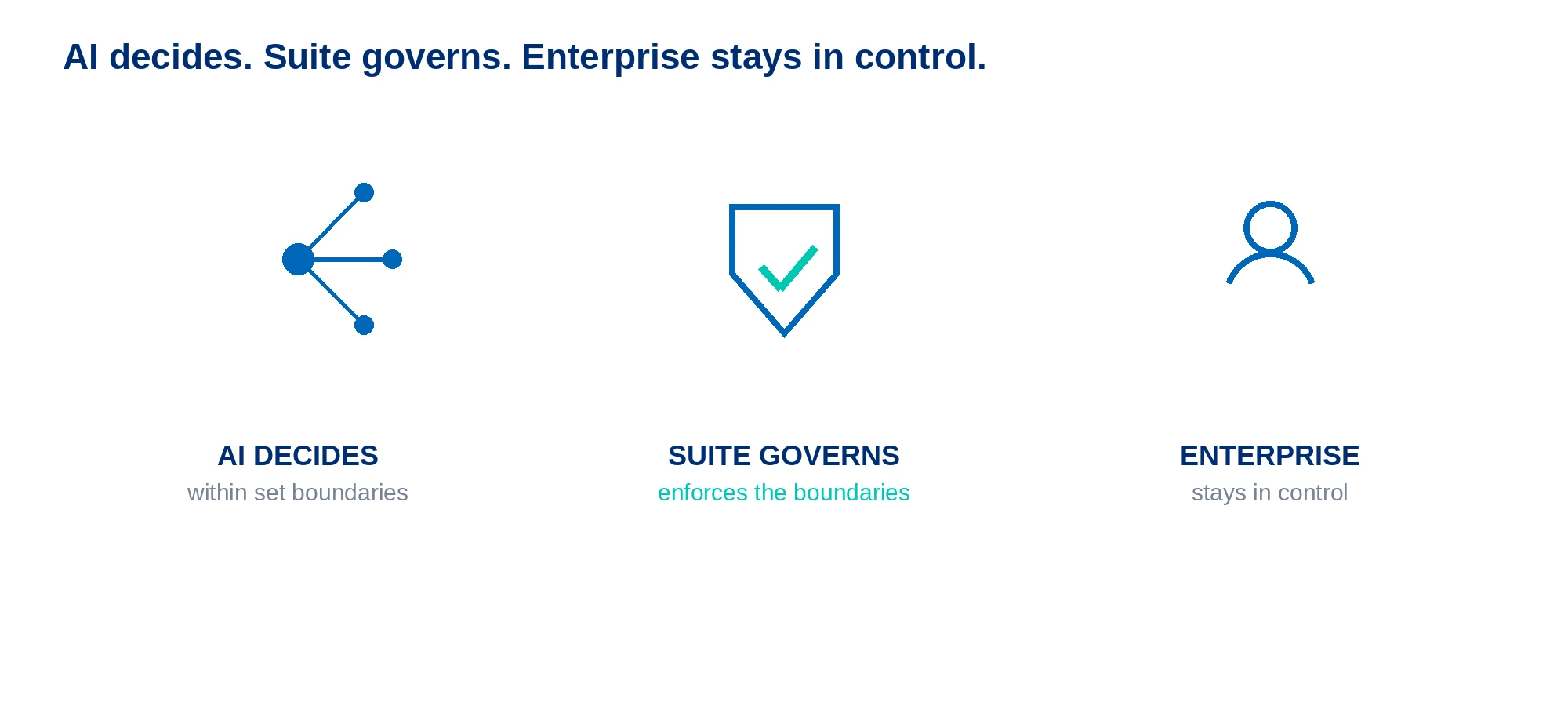
Figure 4. The design goal in one line: the AI decides within boundaries, the suite governs those boundaries, and the enterprise stays in control.
How do you keep a human accountable without slowing the agent down?
By reviewing exceptions and outcomes, not every action. An autonomous agent that requires a human to approve each individual step is not autonomous, and it will be abandoned for being slow. The workable model is that the agent executes within its guardrails, and people review the exceptions the guardrails flag, the aggregated outcomes, and the audit trail, while still holding the hard checkpoints on the few decisions that commit the organization. Done well, enforcement in the flow does not just control risk, it improves outcomes.
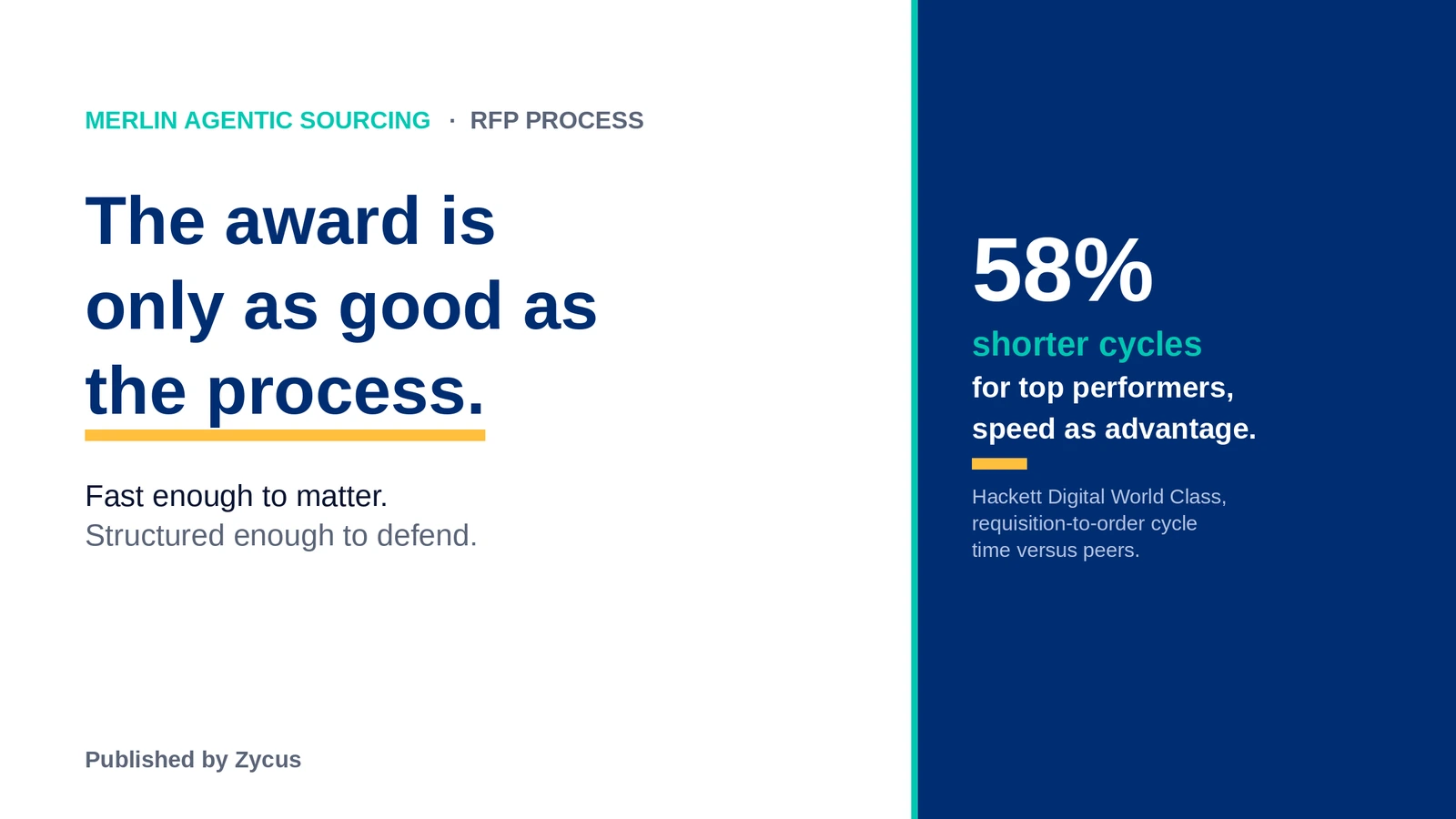
Hackett’s 2026 research on AI world class procurement found that moving buyers into guided, policy-aligned channels cut maverick spend leakage by 69%, because the compliant path became the path of least resistance. Enforcement built into the flow is not a brake. It is what makes the speed safe to use.
How do you roll this out without stalling adoption?
Escalate autonomy as trust is earned, rather than granting it all at once. Begin with the agent observing and advising, where a human still executes, and confirm the gates behave as intended on real events. Move to acting with approval, where the agent proposes and a person commits. Only then extend to autonomous execution on the lower-risk steps, keeping the hard human checkpoints on award and negotiation permanently. Give every autonomous agent a named human owner, so accountability is never ambiguous, and keep the audit trail complete enough that a compliance reviewer can reconstruct why the agent did what it did without having to interview the person who configured it. Rolled out this way, governance is not the thing that slows the agent down. It is the thing that lets the organization keep handing it more to do.
Enabling AI agents to execute sourcing workflows unlocks massive operational speed, but sustained success relies on uncompromised governance. Implementing native policy enforcement in agentic sourcing ensures that autonomous tools like negotiation agents operate safely within enterprise parameters, eliminating rogue spend while freeing procurement teams to focus on high-value strategy.
Ready to harness autonomous AI without giving up control? Request a demo today to see how Zycus’s governed agentic AI platform keeps your sourcing workflows fast, automated, and fully compliant.
Frequently Asked Questions
Q1. How do you enforce procurement policy when an AI agent is doing the buying?
By making policy a set of gates inside the agent’s workflow rather than a document checked afterward. Approved-vendor checks, compliance validation, and risk screening run at the moment of the action, and the highest-stakes decisions stay behind human checkpoints. Enforcement built into the flow works because the agent cannot pass a gate it has not satisfied.
Q2. Why is after-the-fact governance a problem for agentic systems?
Because autonomous agents act faster than any reviewer can check, so a control applied after the decision arrives too late to prevent anything. McKinsey’s 2026 AI Trust Maturity Survey found security and risk are the top barrier to scaling agentic AI for nearly two-thirds of organizations, and only about a third have mature controls. Enforcement has to sit inside the decision, not after it.
Q3. What is proportional governance for AI agents?
It is matching the strength of a control to the risk of the action. A step that only reads data needs light control, a step that recommends a supplier needs compliance and risk checks, and a step that commits the organization to an award needs a hard human checkpoint. Applying uniform lockdown to everything both slows low-risk steps and under-controls high-risk ones.
Q4. Does policy enforcement slow an autonomous sourcing agent down?
Not if it is designed as exception-based review rather than step-by-step approval. The agent executes within its guardrails while people review exceptions, outcomes, and the audit trail, and hold the checkpoints on the few decisions that commit the organization. Well-designed enforcement can improve outcomes, since guided, policy-aligned buying reduces off-contract leakage.
Q5. What controls does an autonomous procurement agent need?
Scoped data access and audit logging for read and draft steps, approved-vendor and compliance and risk checks for supplier recommendations, and hard human checkpoints for supplier selection, negotiation approval, and award. The principle is to attach a control to each action sized to that action’s consequence.
Q6. How does Merlin Agentic Sourcing keep autonomous sourcing compliant?
It runs policy as gates inside the sourcing flow: supplier discovery against approved-vendor and risk screening, compliance validation on the event, configured environmental and social weighting inside supplier ranking, and preserved human checkpoints at supplier selection, negotiation, and award. The design keeps the enterprise in control of the boundaries the agent operates within.
Q7. Who is accountable when an AI agent makes a procurement decision?
The organization is, which is why every autonomous agent should have a named human owner and why the decisions that commit the organization stay behind human checkpoints. Accountability is preserved through legible, logged decisions and through keeping the consequential actions under human sign-off, even when routine steps run autonomously.