








For too long, procurement teams have treated the RFP timeline as a simple measure of administrative efficiency. However, in today’s volatile market, the speed at which you execute a sourcing event directly impacts the bottom line. Viewing your request for proposal timeline solely through the lens of hours saved misses the bigger picture: every day a strategic contract is delayed is a day of lost savings, stalled innovation, and deferred business value. By accelerating this cycle, organizations can transform sourcing from a routine back-office function into a competitive revenue engine. A shorter RFP cycle looks like time saved. Its real value is throughput, and throughput is where the dollars are.
TL;DR
- Faster RFP timelines are usually pitched as efficiency, which is why finance discounts them.
- The real conversion is throughput: a fixed team running more competitive events brings more spend under competitive pressure and captures value sooner.
- McKinsey reports procurement now manages 50% more spend per person than five years ago, so throughput, not headcount, is the constraint.
- In healthcare, faster cycles also pull forward the cost capture and capacity that wait behind a signed contract.
- Merlin Agentic Sourcing is designed to let a team run 3 to 5 times more sourcing events by cutting cycle time from strategy to award by up to 60%.
A faster RFP timeline is almost always sold as efficiency: fewer hours, less waiting, a lighter administrative load. Framed that way, it loses in the one room that matters, because a CFO discounts saved hours to near zero. The financial case for speed is not the hours. It is throughput. When a fixed sourcing team can run more competitive events in the same year, more spend comes under competitive pressure and more value is captured sooner. This guide makes the throughput argument for VP of Sourcing and Director of Procurement leaders at healthcare systems who need to defend a speed investment in financial terms.
Why is a faster RFP treated as an efficiency win instead of a financial one?
Because the first thing anyone measures is time, and time reads as a soft number. A team reports that an RFP that used to take ninety days now takes forty, and the saving is logged as fifty days of staff effort. Finance hears an efficiency claim, applies the usual discount to soft savings, and moves on. The framing is the problem. Saved days are only the mechanism. What those saved days actually produce, if the organization chooses to use them, is capacity to run more sourcing events with the same people. That is a throughput gain, and throughput is a financial quantity. The pressure to make this shift is not abstract. McKinsey reports that the spend managed per procurement full-time equivalent is now 50% higher than it was five years ago, which means the constraint on most teams is no longer budget or headcount. It is how much sourcing a fixed team can physically get through.
What does RFP cycle time actually gate in a health system?
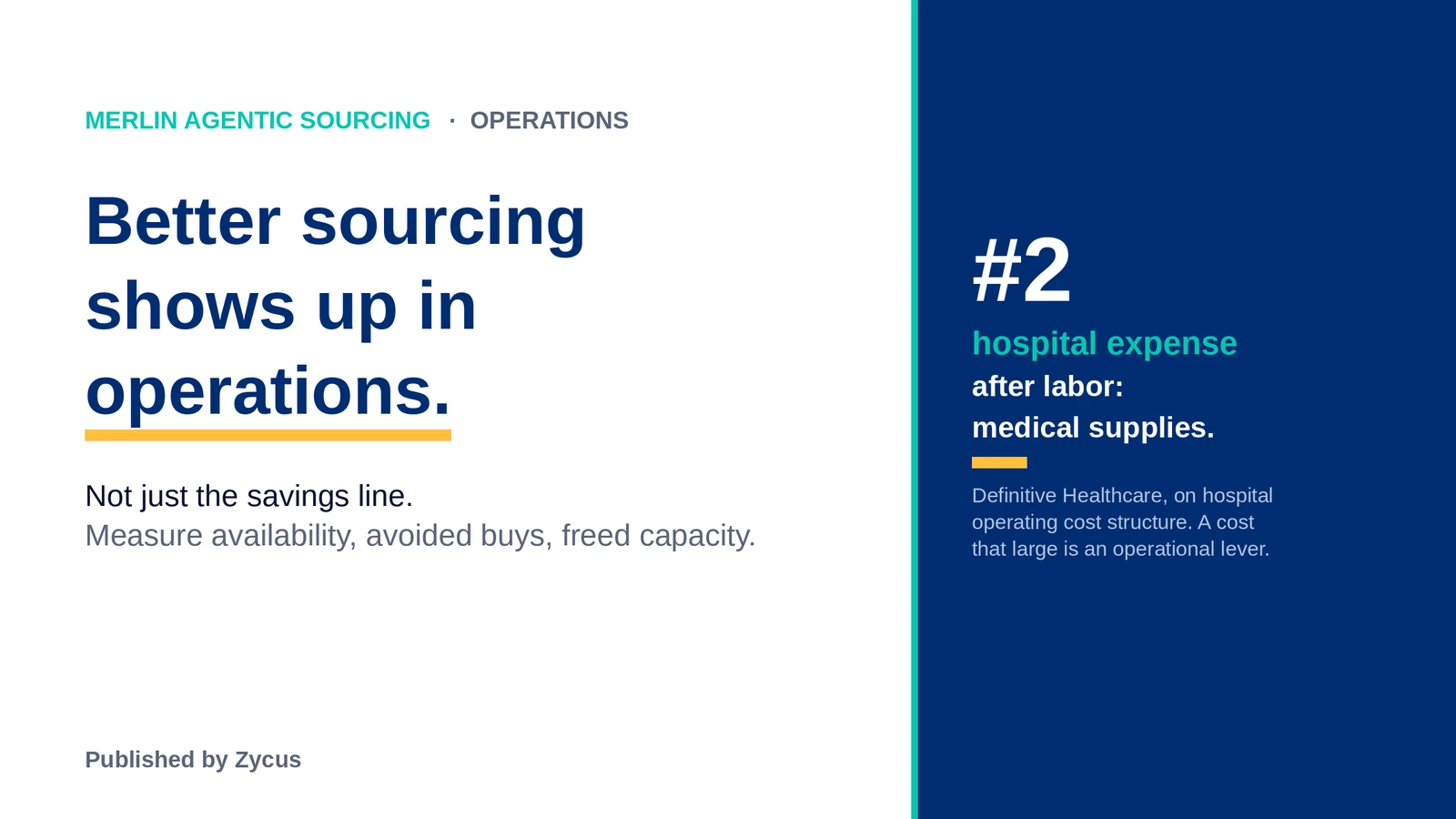
More than staff hours. In a hospital or health system, the signed contract at the end of a sourcing event is the thing that unlocks everything downstream. A new imaging service cannot begin billing until its contract is awarded. A replacement for an aging infusion pump fleet cannot be deployed until the sourcing decision is made. A renegotiated supply agreement does not start saving money until it is signed.
Every week the RFP sits in the queue is a week the value behind it stays locked. This is why cycle time in healthcare is not only an efficiency metric. It is the gate on when cost capture and operational capacity actually arrive. A slow cycle does not just cost effort. It defers the financial outcome the sourcing event was run to produce. A contract that could have started saving in the second quarter but closes in the fourth surrenders two quarters of savings that never come back, and in a health system running dozens of these events a year, the deferred total is rarely small.
How does throughput convert speed into dollars?
Through two mechanisms, and it is worth being precise about both. The first is coverage. A team that runs more events each year brings more of its addressable spend under competitive pressure rather than leaving it to roll over on incumbent terms. Most sourcing teams have a backlog of categories they know are worth competing but never reach, and every one of those is savings left uncaptured. More competitively sourced spend means more negotiated savings, on categories that would otherwise never have been touched. The second is timing. Value captured in the first quarter is worth more than the same value captured in the fourth, because it compounds and because it lands in the current year. Faster cycles pull captured value forward.
McKinsey estimates that shifting routine work to AI and redeploying teams toward strategy could make the procurement function 25 to 40% more efficient, and the point of that efficiency is not a smaller team. It is a team that converts the same headcount into more sourced value. Efficiency framed as throughput is a revenue story. Efficiency framed as hours saved is not.
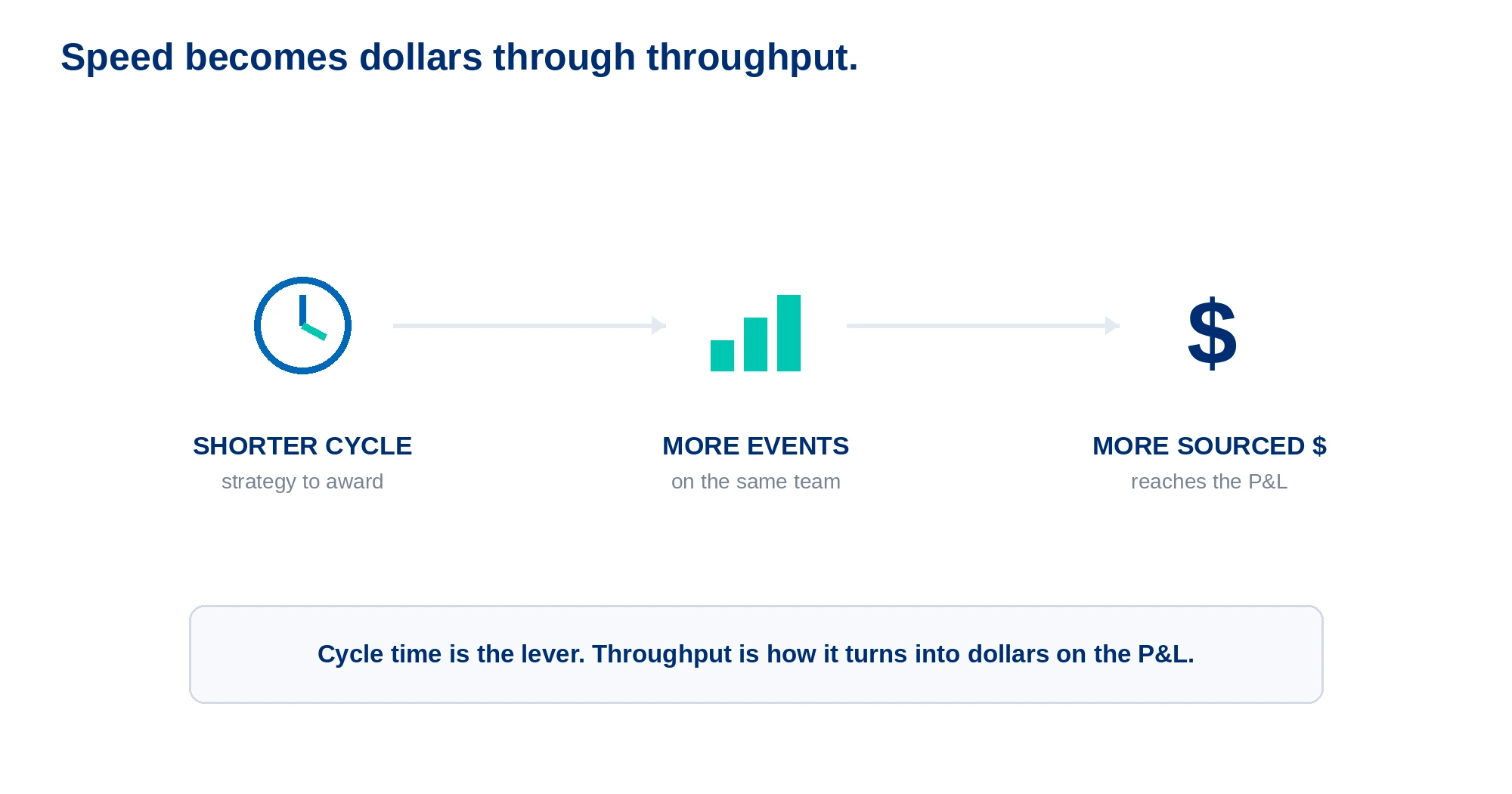
Figure 2. Speed becomes dollars through throughput: a shorter cycle lets the same team competitively source more events.
What is the throughput ceiling on a fixed team, and why does it bind?
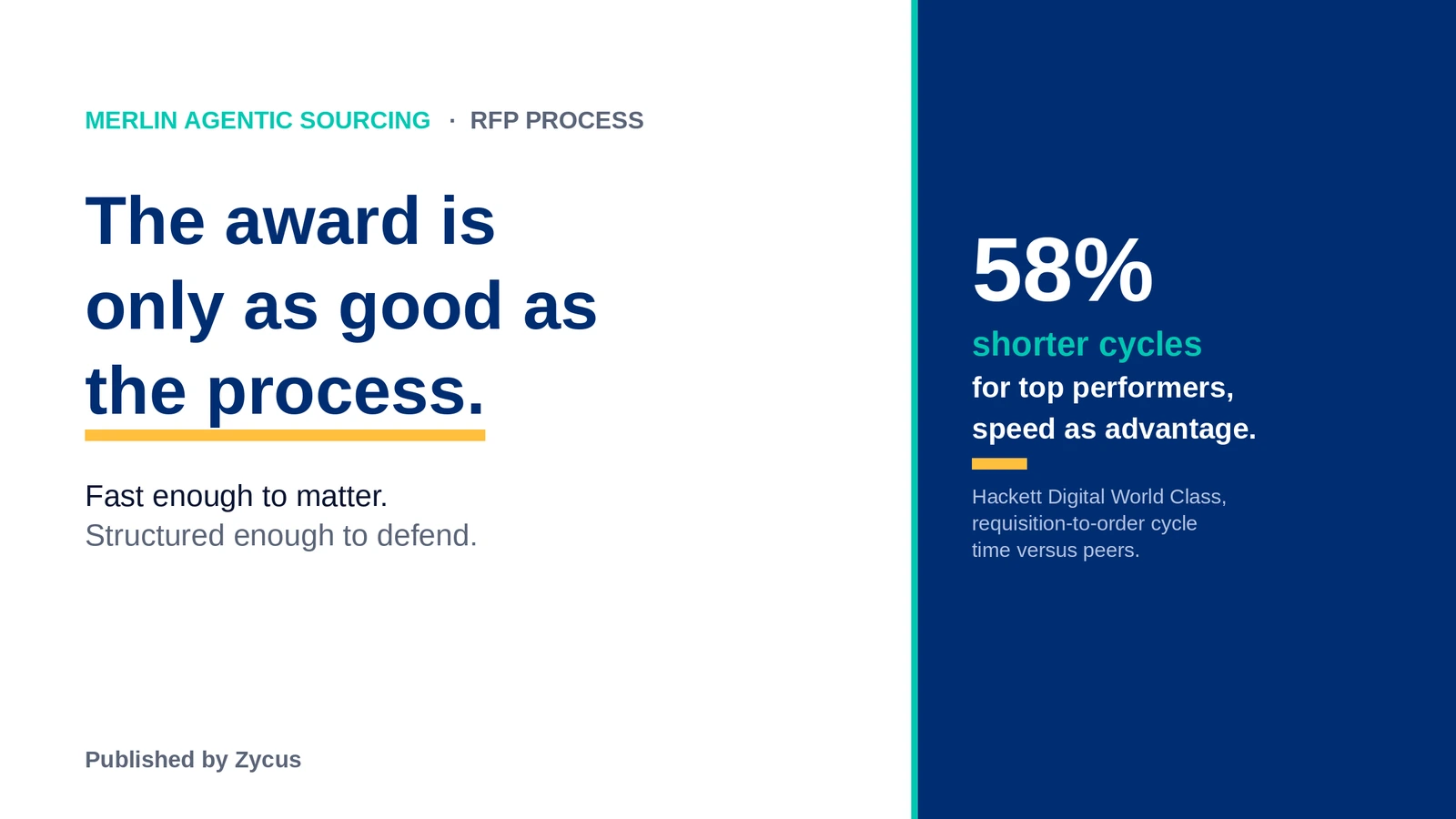
Every sourcing team has a ceiling: the number of competitive events it can run in a year before quality starts to slip. That ceiling is set almost entirely by how long each event takes. Halve the cycle time and the ceiling roughly doubles, without adding a single person. This is where the leanest teams already separate themselves. The Hackett Group finds that digital world class procurement organizations deliver 2.6 times higher return on investment than their peers while operating with 31% fewer full-time employees, using speed as a deliberate competitive advantage. They are not winning because they are bigger. They are winning because each person clears more sourcing work, which means more spend touched and more value captured per head. The ceiling is the constraint. Speed is how it lifts.
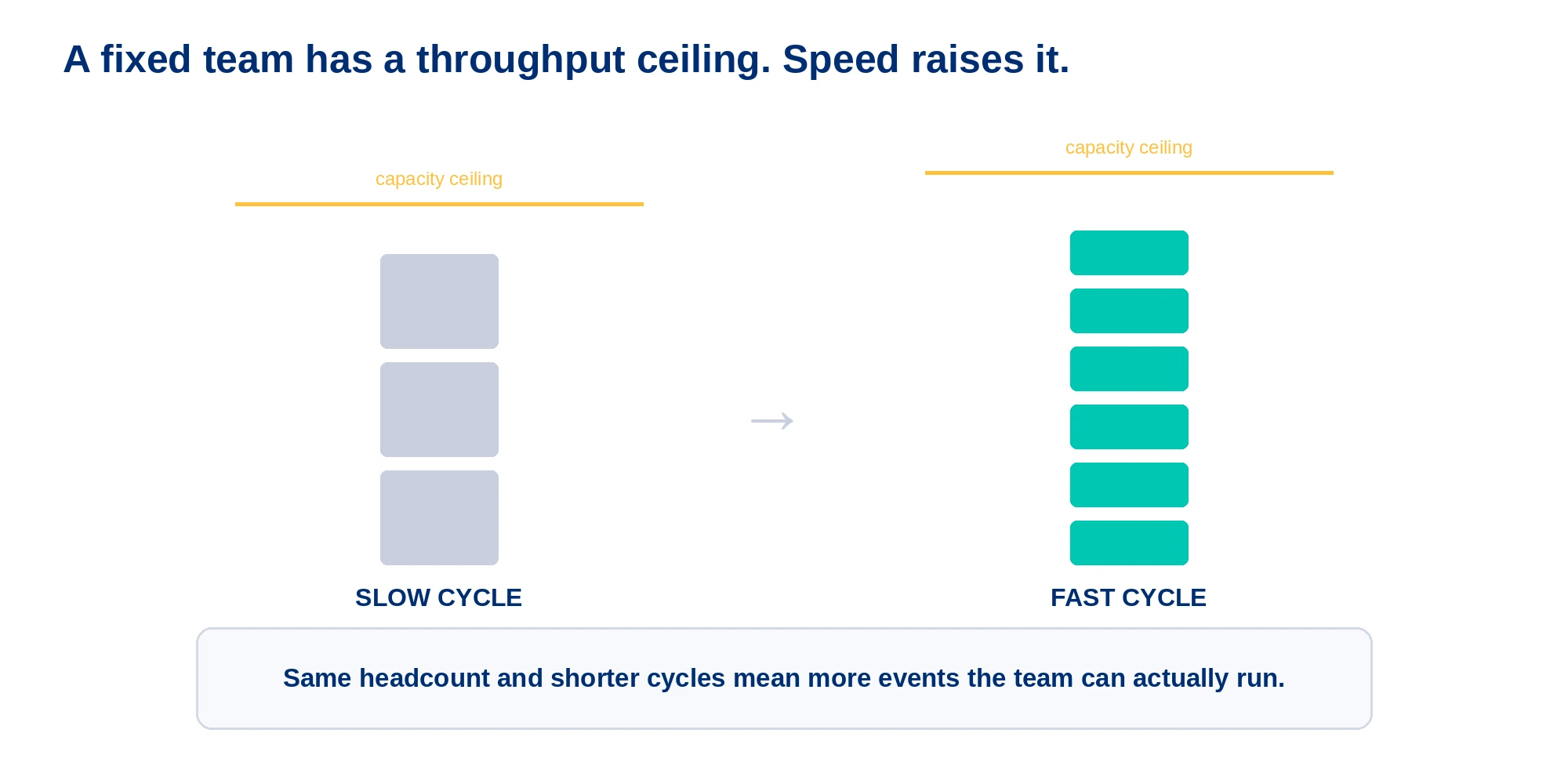
Figure 3. A fixed team’s throughput ceiling is set by cycle time; shorter cycles fit more events under it, no new headcount.
Where does agentic sourcing lift the ceiling?
This is the point where the tool matters. Merlin Agentic Sourcing runs a strategic sourcing category from problem statement to award across two connected phases, a strategy phase that builds the analysis, should-cost model, and supplier shortlist, and an execution phase that authors the event, validates compliance, and models award scenarios. Because both phases run on one data layer, the work that usually stalls a cycle, rebuilding context between stages, largely disappears.
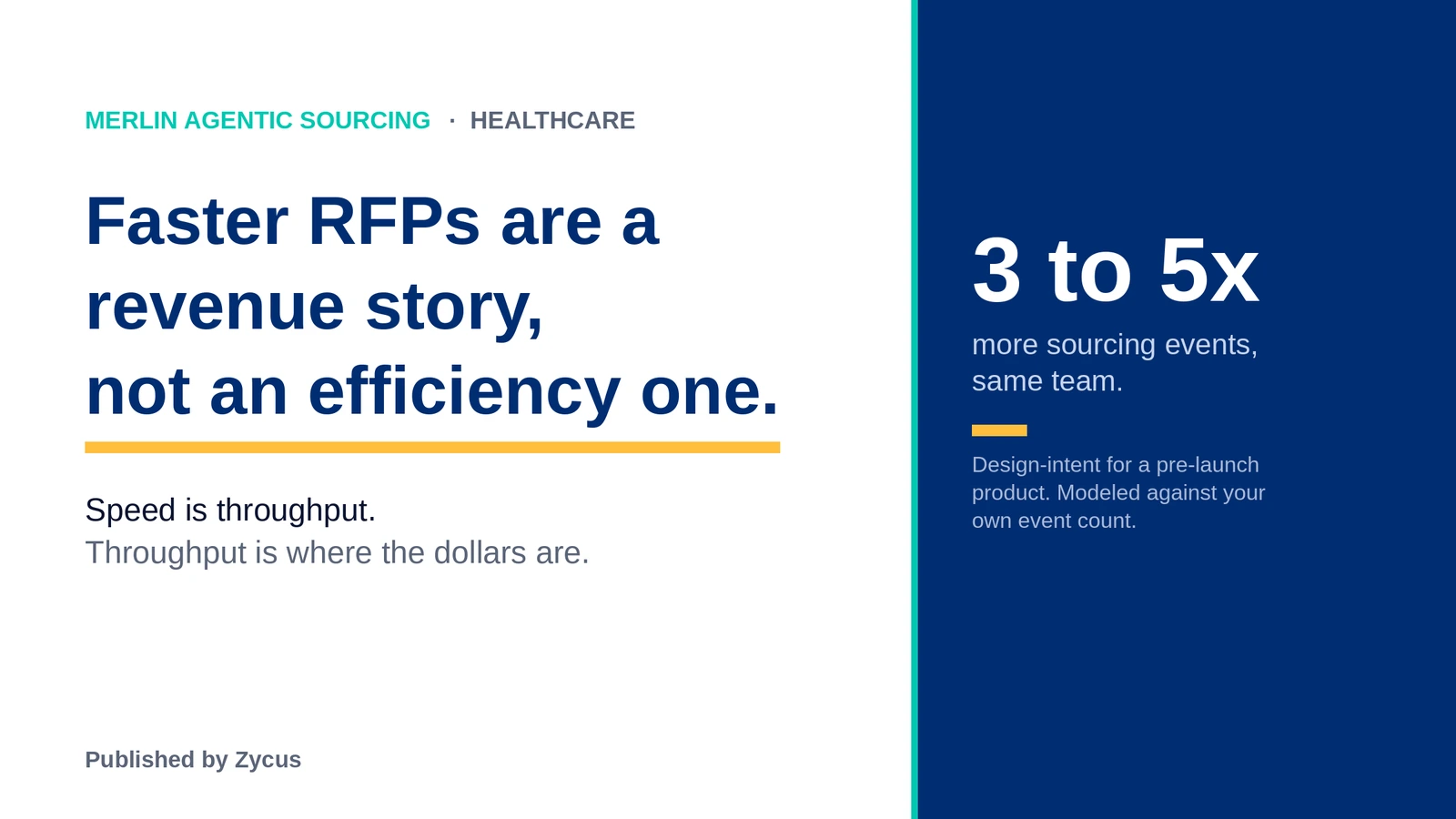
It is designed to cut cycle time from strategy to award by up to 60%, and in doing so to let the same team run 3 to 5 times more sourcing events in a year. In live demos it drafts a thirty line pricing table in about three minutes, though that is a demo condition rather than a customer benchmark. These are design-intent figures for a pre-launch product, not proven customer results, so they belong in a business case as the throughput lever applied to your own event count, not as a guaranteed outcome.
Which of these dollars will a CFO actually bank?
Not all of the throughput story is equally hard, and the honest case says so. The negotiated savings from newly sourced spend are hard: they show up as a lower contracted price against a documented baseline. The pull-forward value from faster capture is defensible when the timing is documented against the prior cycle. The recovered capacity itself, the raw ability to run more events, is only worth what the organization actually does with it.
If the freed capacity runs more competitive events on real spend, it converts to hard savings. If it does not, it stays potential. So present throughput as a capacity that has been given a specific use, more events on named categories, rather than as a standalone number. A CFO banks the sourced savings, not the abstract capacity.
How do you argue throughput to finance without overclaiming?
Lead with the mechanism, not the headline. Show the current event count and the current median cycle time, the two numbers that define today’s ceiling. Show what a faster cycle does to that ceiling, and name the specific categories the extra events would cover. Attach the negotiated savings only to that named additional spend, not to the whole book. Keep the product figures labeled as design-intent, because a claim a CFO can puncture damages every other number in the case. The argument that survives is the modest, mechanical one: faster cycles raise the throughput ceiling, a higher ceiling means more spend competitively sourced, and more competitively sourced spend is where the dollars are. That chain is defensible at every link, which is exactly why it persuades.
Ultimately, shrinking the RFP timeline to purchase order is about capturing market opportunities and locking in negotiated savings before they expire. When procurement shifts its focus from merely cutting administrative friction to actively driving enterprise value, the entire organization benefits from faster speed-to-market.
Ready to transform your sourcing cycle and turn your RFP timeline into a strategic revenue advantage? Request a demo today to see how Zycus’s AI-powered platform accelerates every step of your procurement process.
Frequently Asked Questions
Q1. How do faster RFP cycle times translate into financial return?
Through throughput. A shorter cycle lets a fixed team run more competitive sourcing events per year, which brings more spend under competitive pressure and captures negotiated savings sooner. The return is the additional sourced savings plus the time value of capturing them earlier, not the staff hours saved, which finance discounts.
Q2. Is faster sourcing a cost saving or a revenue lever?
It is closest to a revenue lever, because its main value is capacity. Faster cycles let the same team cover more addressable spend competitively, generating savings on categories that would otherwise roll over untouched. Framing it purely as a cost or efficiency saving understates it and invites a CFO to discount it.
Q3. What is the throughput ceiling on a sourcing team?
It is the number of competitive events a team can run per year before quality slips, and it is set mostly by cycle time per event. Because spend managed per procurement FTE has risen sharply, that ceiling, not headcount or budget, is the real constraint on how much value a team can source.
Q4. How much can agentic sourcing increase sourcing throughput?
Merlin Agentic Sourcing is designed to let a team run 3 to 5 times more sourcing events by cutting cycle time from strategy to award by up to 60%. Those are design-intent figures for a pre-launch product, so they should be modeled against your own current event count rather than treated as a guaranteed result.
Q5. Why does faster value capture matter financially?
Because value captured earlier is worth more than the same value captured later. Savings realized in the first quarter compound and land in the current fiscal year, while savings deferred to the fourth quarter may slip into the next. Faster cycles pull captured value forward, which a CFO can credit against the current year.
Q6. How does Merlin Agentic Sourcing report throughput and cycle time?
It runs strategic categories from problem statement to award on a single data layer, which makes event count and cycle time directly measurable within the flow. It is designed to cut cycle time by up to 60% and support 3 to 5 times more events, both design-intent figures for a pre-launch product, so the reliable number is the one modeled against your own baseline.