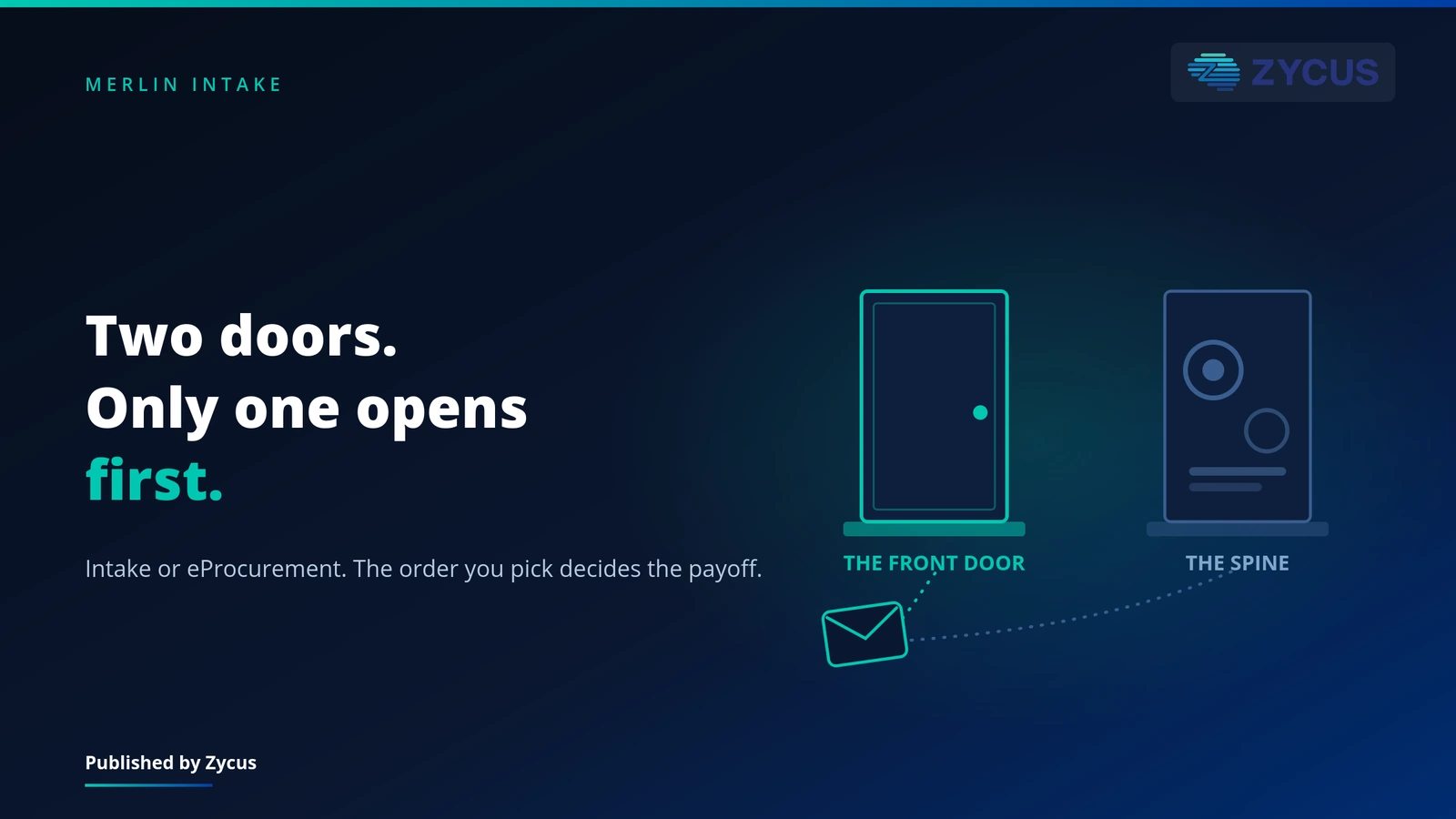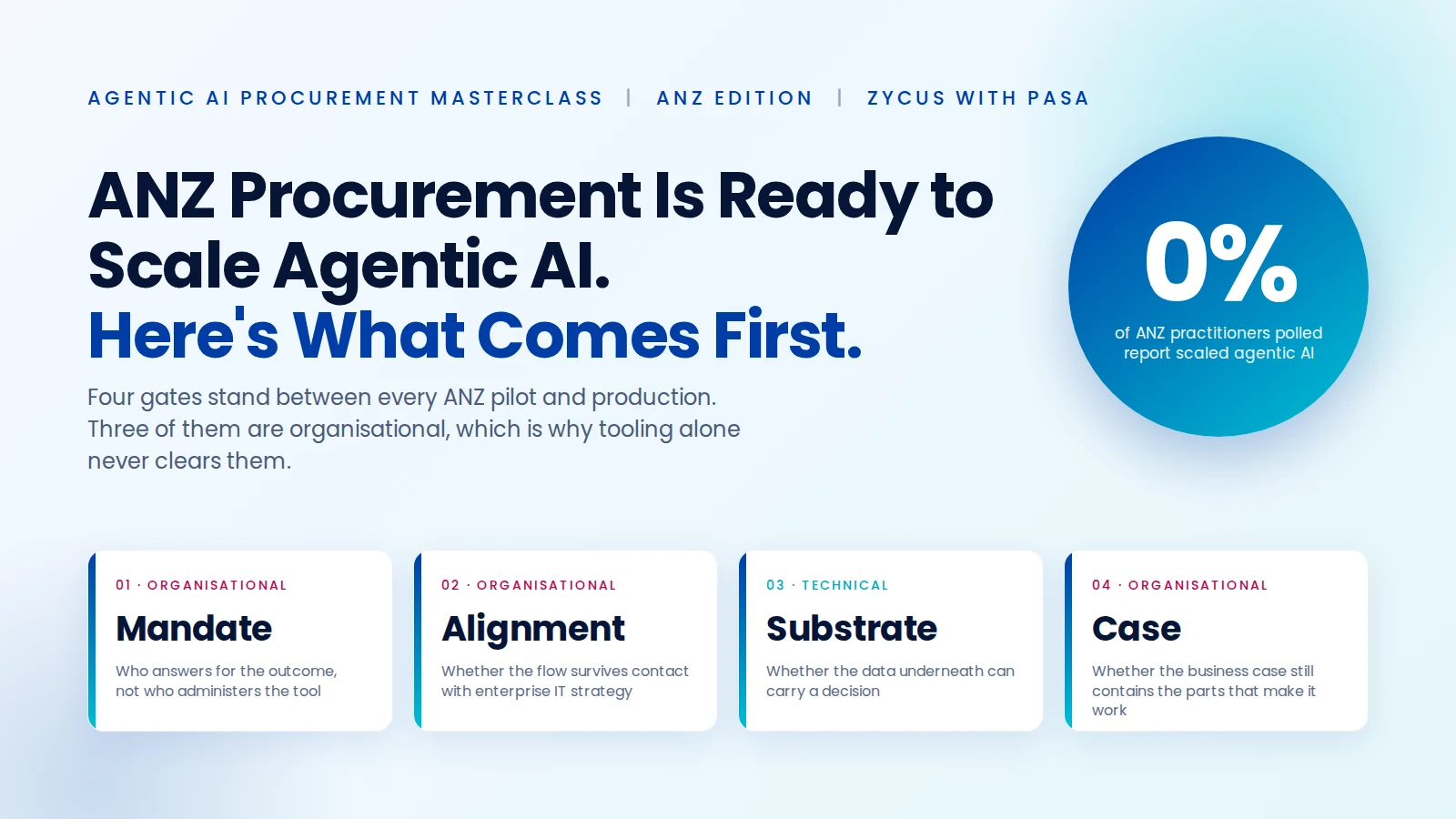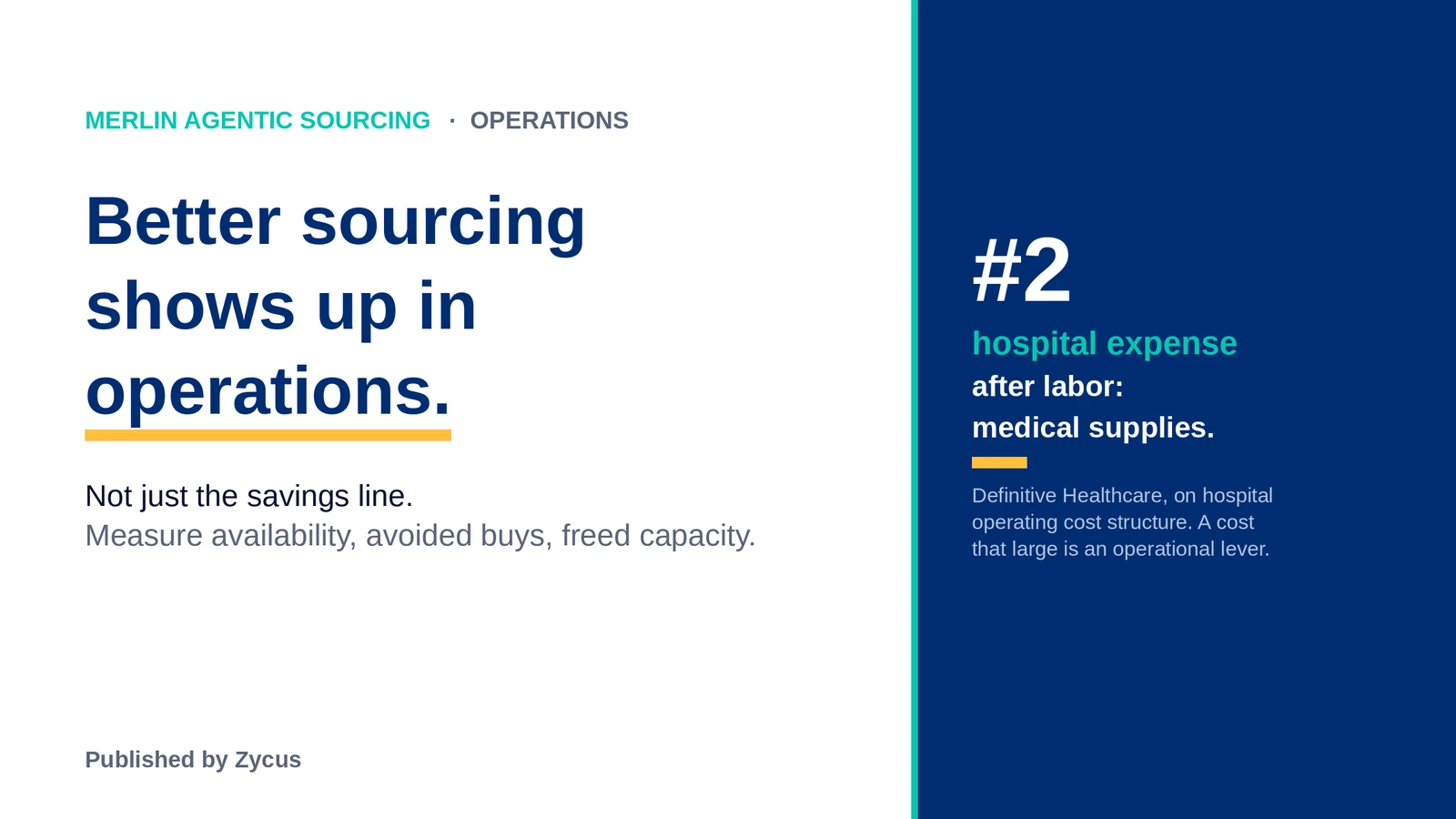









Evaluating software, medical technology, and clinical services requires far more than standard questionnaires. Health tech companies and clinical providers navigate complex security audits, strict HIPAA compliance, and intricate clinical specs, making a purpose-built rfp tool essential for modern healthcare procurement. Relying on generic spreadsheets or legacy sourcing tools delays critical tech adoption and exposes organizations to regulatory risk. By selecting a solution tailored to clinical workflows, health systems can automate scoring, unify stakeholder inputs, and accelerate vendor selection without compromising compliance. Not every RFP tool is the same tool. This is how to match the choice to the sourcing work you actually do, and to the compliance your setting demands.
TL;DR
- Choosing an RFP tool is a fit problem, not a feature checklist: the right tool matches the complexity of the sourcing work you do.
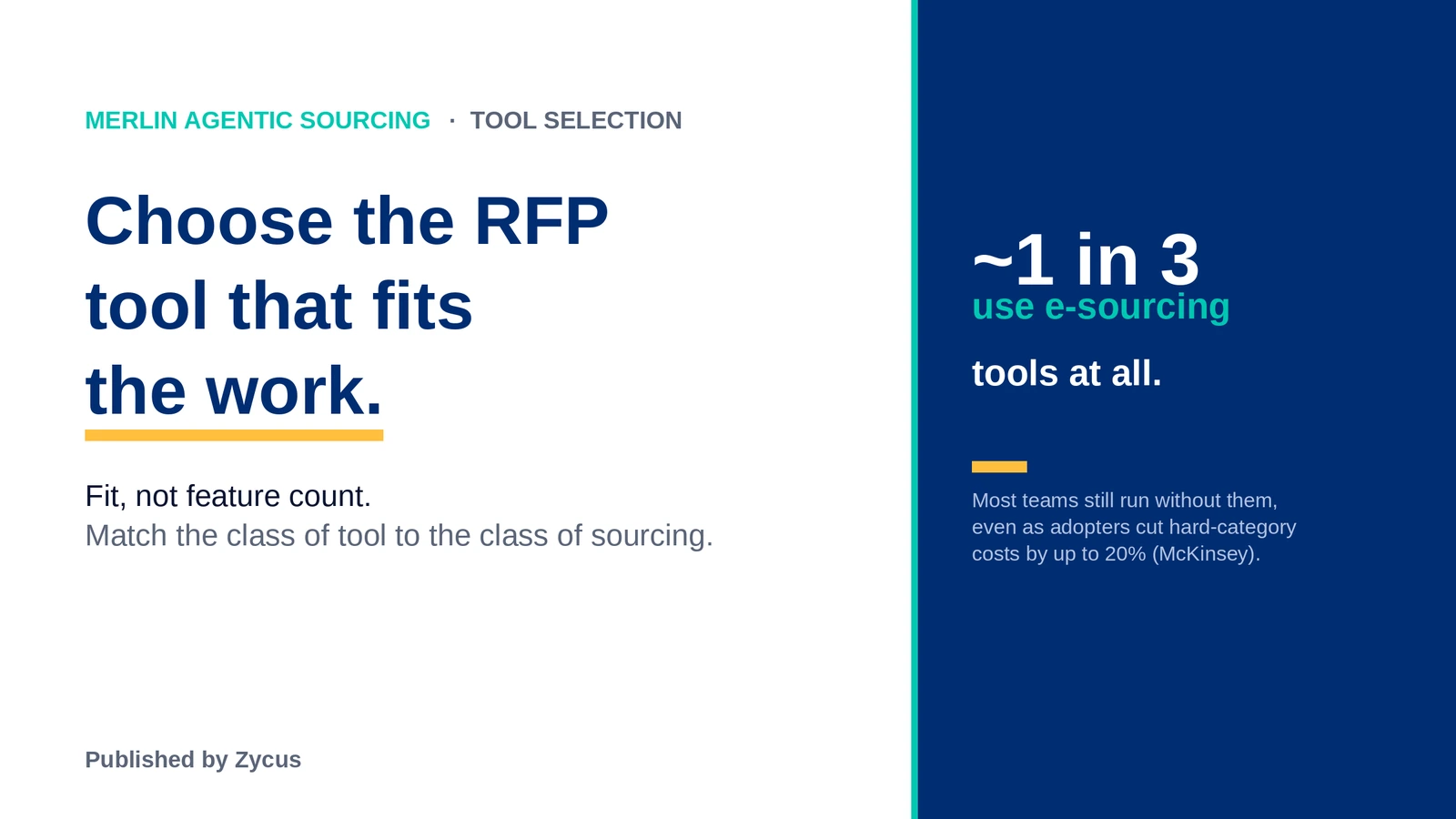
- Most procurement teams still run without e-sourcing tooling, even though adopting it has cut costs by up to 20% in hard categories.
- The common failure is buying automation where you needed intelligence, or intelligence where a simple template would do.
- For clinical and health-tech sourcing, weight compliance, approved-vendor control, and integration as heavily as speed.
- Merlin Agentic Sourcing is built for complex, strategic sourcing where the work is judgment, not just form-filling.
Choosing an RFP tool is usually approached as a feature comparison, which is the wrong frame. The better question is fit: what kind of sourcing work does your team actually do, and which tool matches it. A team that runs high-volume, low-complexity buys needs something different from a team sourcing a multi-year clinical service contract. This guide is for VP of Sourcing and Director of Procurement leaders at health systems and health-tech organizations deciding which RFP tool, if any, matches the sourcing they run.
What are you actually buying an RFP tool to do?
Start by naming the work, not the features. Some sourcing is essentially structured form-filling: a known category, a known set of suppliers, a repeatable template. Other sourcing is a judgment problem: an unfamiliar category, a supplier field that has to be discovered and qualified, an award that turns on trade-offs rather than lowest price. These are different jobs, and they need different tools. Buying a heavyweight intelligence platform to send a recurring commodity RFP is waste. Buying a template engine to run a complex clinical service sourcing is a false economy that shows up later as a bad award. The first decision is honest classification of your own sourcing mix, because that is what determines which tool will earn its cost. The discipline is to resist the pull of the impressive demo and stay anchored to the work in front of you, because the tool that wins a demo is not always the tool that fits the sourcing you actually run.
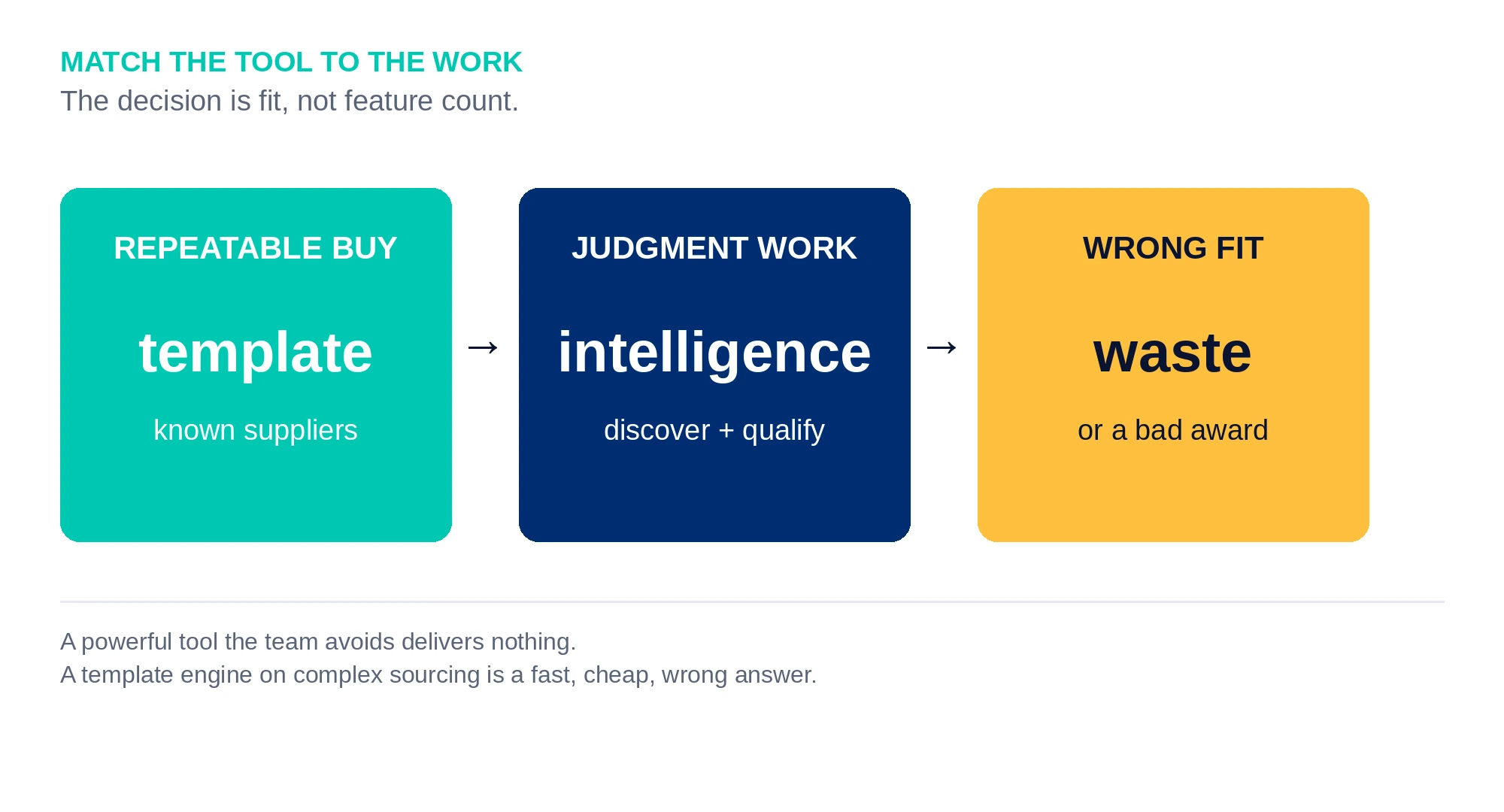
Figure 1. Match the class of tool to the class of work: a template for repeatable buys, intelligence for judgment work, and waste when the two are mismatched.
Why do so many teams still run sourcing without the right tooling?
Because adoption has lagged the technology by years. McKinsey reports that only about a third of companies use e-sourcing tools at all, even though one organization saw a 20% cost reduction in the complex maintenance, repair, and operations category simply by adopting them. Adoption of newer tools is moving faster, though: in the same research, McKinsey found that 40% of procurement functions have begun piloting generative AI, which makes the buyer’s real question less whether to adopt and more which tool actually fits the work. The gap is rarely about availability. It is about tools that were hard to use, so teams fell back on email and spreadsheets. The lesson for a buyer today is to weight usability as heavily as capability, because a powerful tool the team avoids delivers nothing, and a tool that quietly reverts people to manual work is the most expensive kind. The practical test is simple: watch whether people quietly go back to email and spreadsheets after the rollout, because that reversion is the clearest signal that the tool did not fit the way the team works.
What separates automation from intelligence in an RFP tool?
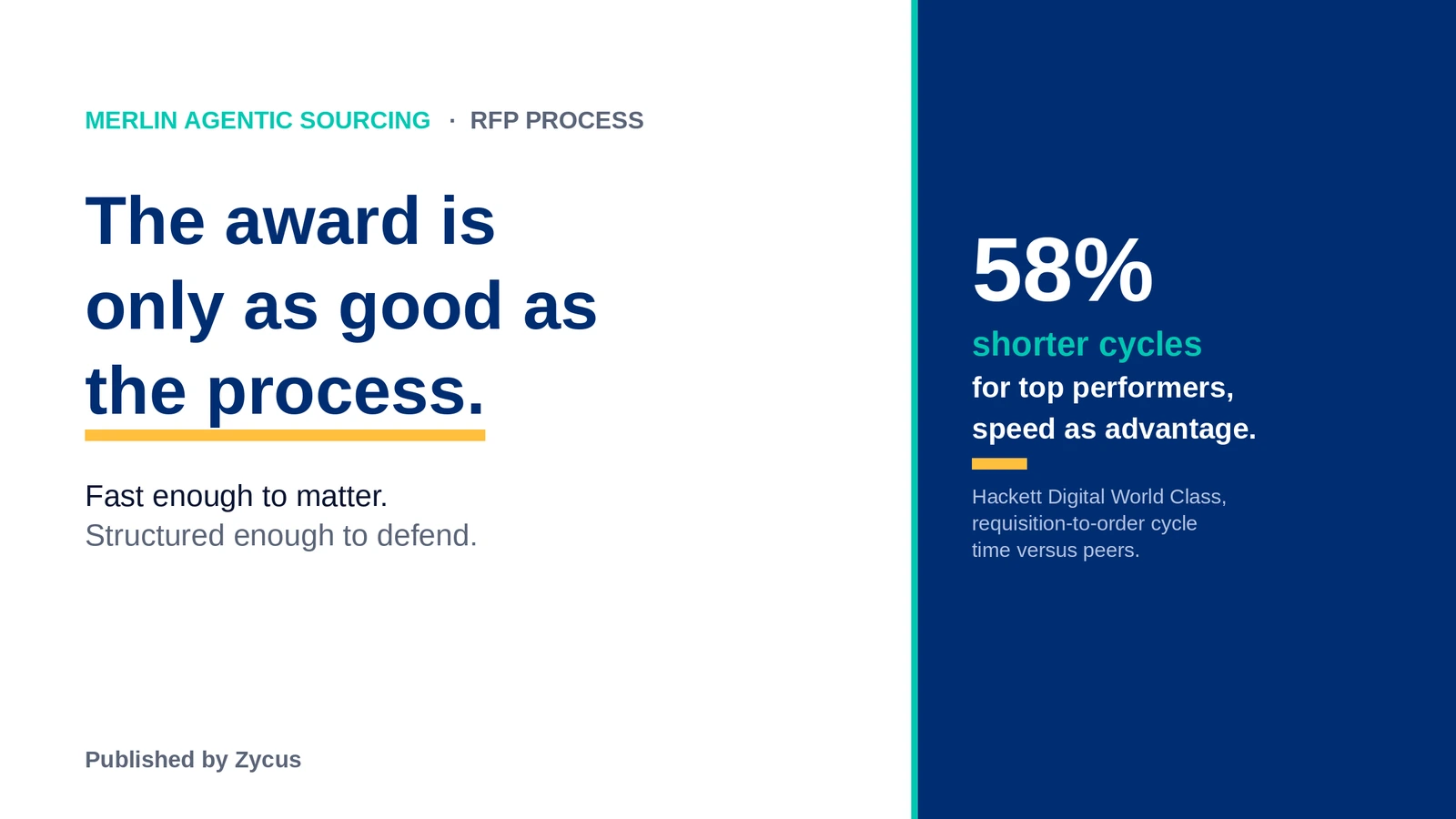
Automation speeds up steps you already know how to do: it routes approvals, populates a template, collects responses. Intelligence changes what the team can do at all: it builds the category analysis, discovers and qualifies suppliers, models award scenarios you would not have had time to construct by hand. Deloitte’s 2026 analysis warns that many so-called agentic initiatives are automation in disguise, and that applying an agent where a simpler tool would suffice produces poor return on investment. The reverse is also true. Applying a template engine to work that needed intelligence produces a fast, cheap, wrong answer. Matching the tool’s class to the work is the whole decision. A useful diagnostic is to ask, for each category, whether the hard part is doing the steps or deciding what the steps should be, since the former wants automation and the latter wants intelligence.
Which criteria matter most for clinical and health-tech sourcing?
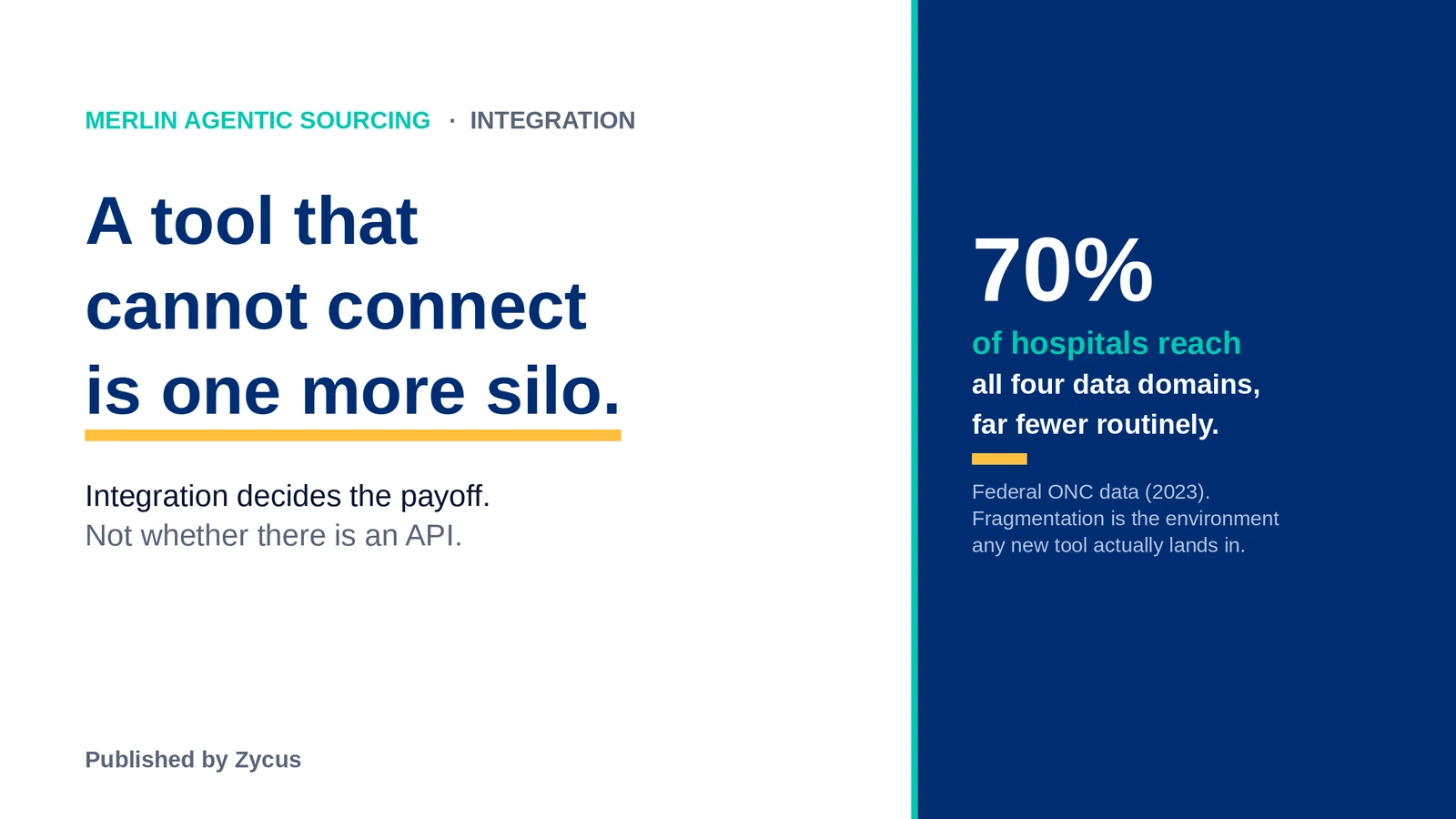
In a healthcare setting, weight three things a generic buyer might underrate. First, compliance and approved-vendor control: the tool must enforce your vendor and certification rules inside the process, not leave them to a reviewer. Second, integration: a tool that cannot exchange data with the systems your organization already runs will create a parallel silo and a reconciliation burden. Third, auditability: when a sourcing decision touches patient-facing services or regulated data, you need a clean record of why the decision was made. Speed matters, but in this setting it is necessary rather than sufficient. A fast tool that cannot enforce compliance is a liability wearing the costume of an upgrade. It is worth naming these explicitly in the evaluation scorecard, because a criterion that is not written down is a criterion that a strong sales presentation can quietly push aside.
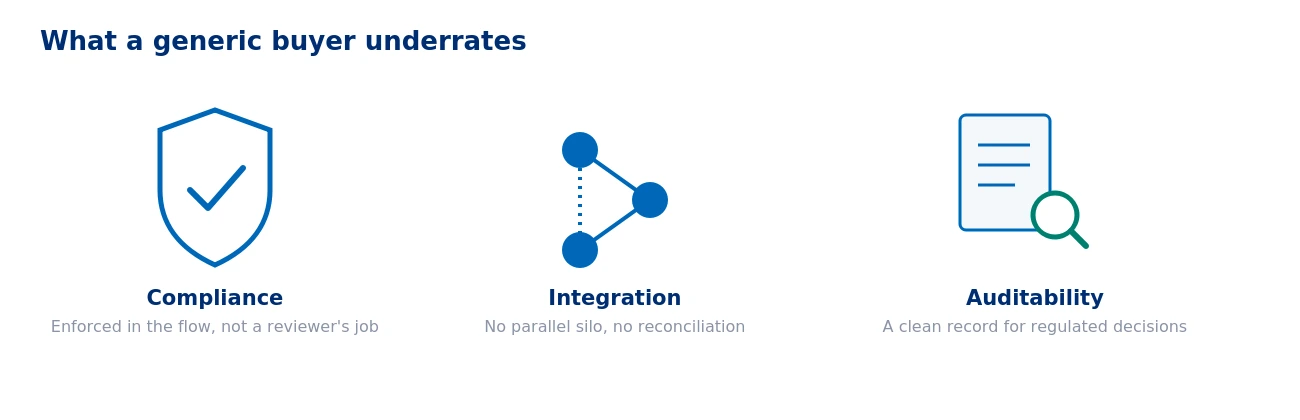
Figure 2. The three criteria a generic buyer underrates in a clinical setting: compliance enforced in the flow, integration without a parallel silo, and auditability for regulated decisions.
Where does agentic sourcing fit in the tool landscape?
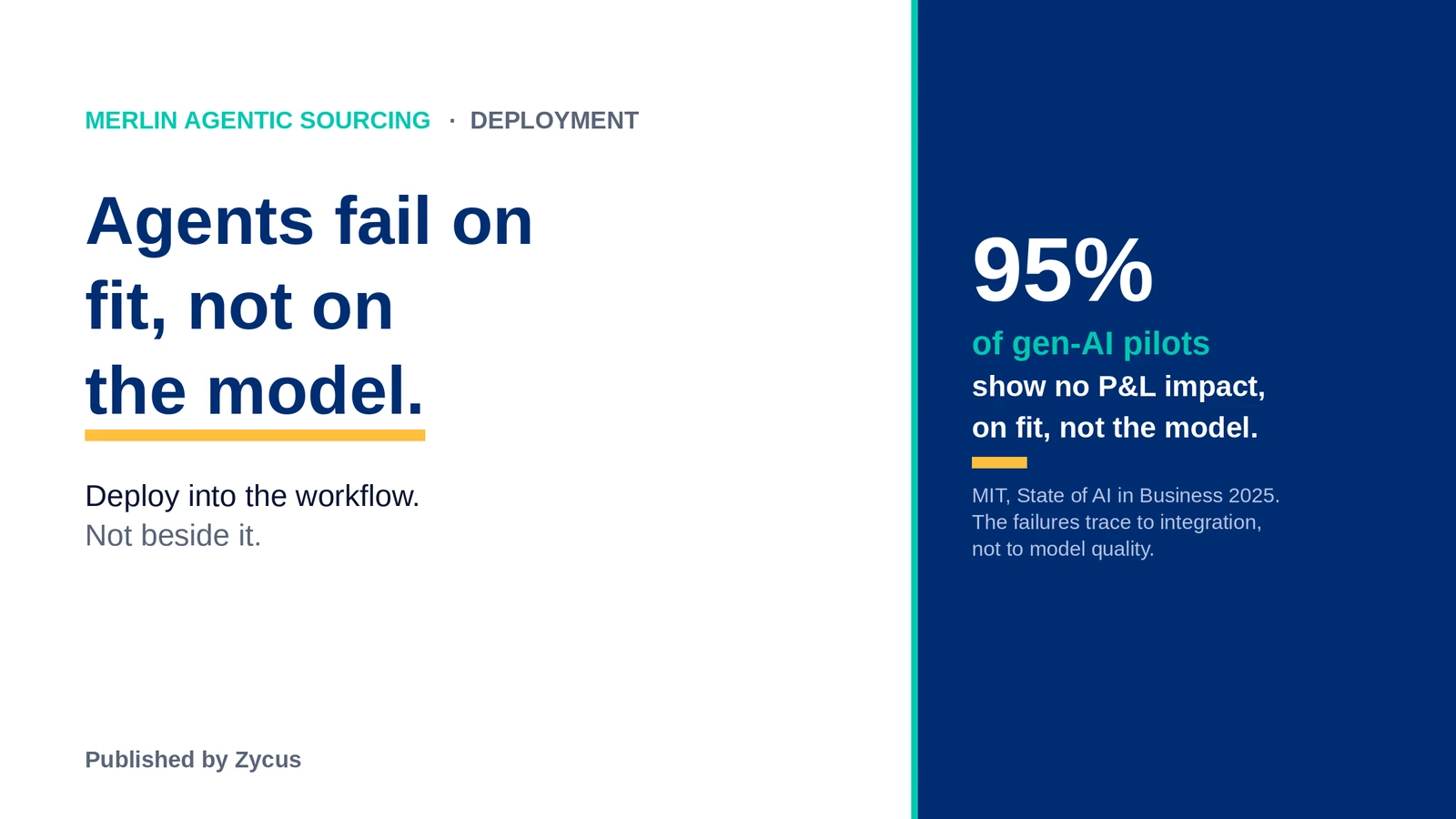
It fits at the intelligence end, for the sourcing that is genuinely a judgment problem. Merlin Agentic Sourcing runs a strategic sourcing category from problem statement to award: it builds the spend and category analysis, constructs a should-cost model, discovers and qualifies suppliers against your approved-vendor and risk criteria, authors the event, and models award scenarios. That is a different class of tool from a template engine or a reverse-auction module, and it is aimed at a different job. As a pre-launch product its throughput and cost figures are design-intent rather than proven customer results, so evaluate it against the strategic sourcing you run, not against your commodity buys, which a lighter tool will handle more cheaply. The point of the classification exercise is exactly this: it tells you which of your work an agentic tool is worth buying for. Treat the pre-launch status as a reason to test the fit against your real strategic categories rather than a reason to wait, since the classification you do now is what tells you when the tool is worth adopting.
How should you run the evaluation itself?
Run it against your own sourcing, not a vendor’s demo script. Pick two or three real categories that span your complexity range, and ask each tool to show how it would handle them end to end, including the compliance gates your setting requires. Involve the people who will actually use it, because usability is the variable that most often decides whether a tool delivers or gets abandoned. Weight the criteria before you see the demos, so a polished presentation does not quietly reweight them for you. And separate the must-haves, such as approved-vendor enforcement and integration, from the nice-to-haves, so a strong showing on the latter cannot paper over a gap in the former. Give the people who run sourcing every day a real vote in the decision, because they are the ones who will either adopt the tool or route around it.
What is the cost of choosing the wrong class of tool?
It is rarely the license fee. The real cost is the mismatch. Under-tool a complex sourcing and you get a fast, cheap, poorly reasoned award that costs multiples of the license over the life of the contract. Over-tool a simple buy and you pay for capability the work never uses, and you slow a process that only needed a template. The most expensive outcome of all is a tool the team quietly abandons, because then you have paid for the license and kept the manual process. Choosing well is not about buying the most capable tool. It is about buying the tool whose class matches the work, so the capability you pay for is the capability you use. Framed this way, the license fee is almost a rounding error against the cost of the mismatch, which is exactly why the classification step is worth the time it takes. The teams that choose well are rarely the ones that bought the most capable platform; they are the ones that were honest about which of their work actually needed it.
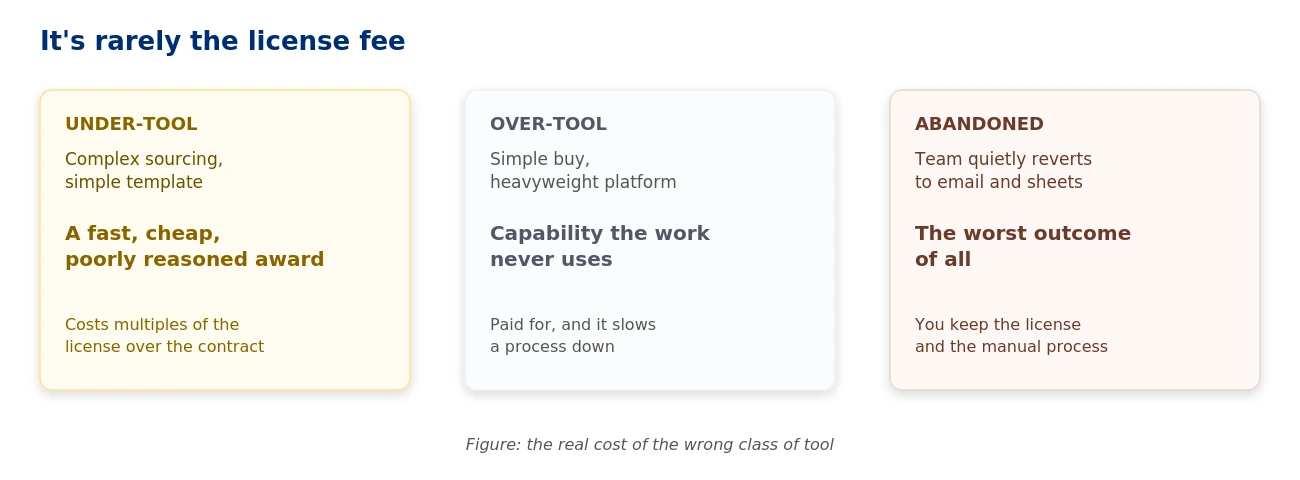
Figure 3. The real cost of the wrong class of tool is rarely the license fee: under-tooling, over-tooling, and the abandoned tool that leaves you paying for both.
Selecting the ideal rfp tool transforms healthcare vendor evaluation from a slow, risk-heavy process into a streamlined operational engine. By automating vendor scoring, enforcing data security guardrails, and facilitating seamless collaboration between clinical and procurement teams, health systems can onboard vital care technologies much faster.
Ready to eliminate evaluation bottlenecks and accelerate your clinical vendor selection? Request a demo today to see how Zycus’s AI-powered sourcing suite simplifies complex procurement for health tech and clinical providers.
Related Reads
A Guide to Effective Cost Reduction Strategies in Procurement
Zero Based Budgeting Procurement: A Strategic Game-Changer for U.S. Businesses
RFI, RFQ, and RFP Explained: A Practical Guide [2026]
Reliable, Fast, and Precise: AI-Powered RFP Automation
Frequently Asked Questions
Q1. How do you choose the right RFP tool for a health system?
Classify your sourcing first, then match the tool’s class to it. Repeatable, low-complexity buys need a good template and workflow engine. Complex, judgment-heavy sourcing needs intelligence that can analyze the category, discover and qualify suppliers, and model awards. In a clinical setting, weight compliance enforcement, integration, and auditability as heavily as speed.
Q2. What is the difference between automation and intelligence in RFP software?
Automation speeds up steps you already do, such as routing approvals and collecting responses. Intelligence changes what the team can do at all, such as building category analysis, qualifying suppliers, and modeling award scenarios. Buying automation where you needed intelligence produces a fast but poorly reasoned result, and the reverse wastes money on capability the work never uses.
Q3. What features matter most for clinical or health-tech RFPs?
Approved-vendor and compliance enforcement inside the process, integration with the systems you already run so the tool does not create a silo, and a clean audit trail for decisions that touch regulated data or patient-facing services. Speed is necessary but not sufficient in this setting.
Q4. Why do so few procurement teams use e-sourcing tools?
Adoption has lagged availability, largely because early tools were hard to use and teams reverted to email and spreadsheets. McKinsey reports only about a third of companies use e-sourcing tools even though adoption has cut costs materially in complex categories. Usability should be weighted as heavily as capability when choosing.
Q5. How do you evaluate an RFP tool without being misled by the demo?
Run the evaluation against two or three of your own real categories that span your complexity range, weight the criteria before seeing any demo, involve the actual users, and separate must-haves like compliance enforcement from nice-to-haves so a strong demo cannot reweight your priorities.
Q6. When is an agentic sourcing tool the right choice?
When the sourcing is a genuine judgment problem: an unfamiliar category, a supplier field that must be discovered and qualified, an award that turns on trade-offs. For repeatable commodity buys, a lighter template tool is more cost-effective. Match the tool to the work rather than buying the most capable option by default.
Q7. What does the wrong tool choice actually cost?
Rarely the license fee. Under-tooling complex sourcing yields poor awards that cost multiples of the license over a contract’s life, over-tooling simple buys pays for unused capability, and the worst case is a tool the team abandons, leaving you with both the cost and the manual process.
Q8. How does Merlin Agentic Sourcing compare to a template or reverse-auction tool?
It sits at the intelligence end of the landscape, aimed at strategic sourcing that is judgment-heavy rather than form-filling. It runs a category from problem statement to award, including analysis, supplier qualification, and award modeling. For simple repeatable buys, a lighter tool is more economical, which is why classifying your sourcing mix comes first.